Introduction: The smart home landscape in 2025
A smart home ecosystem—where networked sensors, voice assistants, cameras, and connected appliances talk to each other to streamline tasks, enhance security, and unlock new levels of convenience—exemplifies this evolving toolkit.
Interoperability is the backbone of a reliable ecosystem. Standards like Matter and the Thread protocol are not just marketing buzzwords; they’re practical frameworks that enable devices from different brands to work together with minimal friction. This guide will help you navigate the landscape with a focus on AI-enabled assistants, security and privacy best practices, energy management, and scalable deployment—so you can build a resilient, future-proof smart home that scales with your needs.
By the end of this guide, you’ll have a clear blueprint for selecting, deploying, and expanding a smart home that truly works for you, and you can explore practical options in our top 10 best smart home devices.
Interoperability and standards: Matter, Thread, and the ecosystem
At its essence, Matter is a unifying standard designed to ensure cross-brand compatibility. It provides a consistent way for devices to communicate over Wi‑Fi, Ethernet, or Thread, so you’re not locked into a single brand or hub. Thread, a low‑power mesh networking protocol, complements Matter by enabling reliable, energy-efficient device-to-device communication that can cover an entire home without a single point of failure.
The practical takeaway: prioritize Matter-certified devices and Thread-enabled products when you can, and look for bridges or hubs that connect non‑Matter ecosystems into a Matter-centric home for smoother future growth, which you can explore at your smart home store.
To visualize how these elements fit together, see the diagram below. It illustrates a Matter-enabled ecosystem with Thread devices connecting through a hub, while cloud and edge services coordinate with local automations and remote access. This architecture minimizes latency for critical tasks, preserves privacy by keeping sensitive automation anchored on the local network when possible, and remains extensible as new devices arrive.
Matter Hub
Local automations
Thread Mesh Low-power links
Cloud/Edge Interoperability layer
AI-enabled assistants and automation
AI-enabled assistants are the conversational glue of a modern smart home. Major platforms—Amazon Alexa, Google Assistant, Siri/Apple, and Samsung SmartThings—offer varying blends of on-device processing and cloud intelligence. On-device processing, when available, minimizes latency and enhances privacy by keeping sensitive computations local. Cloud processing unlocks more advanced capabilities, broader third-party integrations, and hands-free experiences that adapt to your routines. The best practice is to design automations that use a hybrid approach: keep critical, privacy-sensitive tasks on-device and route non-critical decisions to the cloud when needed for richer context.
You can craft privacy-aware automations by limiting data sharing, using local control where possible, and employing explicit triggers rather than constant polling. Cross-platform triggers enable routines that span ecosystems without forcing you into a single vendor stack. For example, you could have a morning routine that: a) greets you via whichever assistant you start with, b) raises the thermostat to a preferred setpoint, c) dims lights in rooms you’ve designated, and d) disarms a camera when your phone is present and in a trusted location. Natural-language commands like “Hey Assistant, set away mode if I’m not home and the energy saver is on” demonstrate practical cross-platform automation with minimal friction.
“The real value of AI assistants in smart homes isn’t only voice control—it’s the ability to plan and optimize energy use, security interactions, and routine orchestration across devices while preserving user privacy.”
— Dr. Lena Park, Chief Researcher, HomeTech Lab
When designing automations, favor context-aware commands over brittle, one-shot actions. For example, instead of a rigid rule like “If motion in living room, turn on lamp,” use a combined context: “If motion in living room after sunset and I’m not at home, turn on lighting to minimal safety levels.” This approach reduces false positives and creates a smoother, more intuitive user experience.
Security and privacy best practices

Building a secure smart home requires deliberate habits and layered protections. Start with identity and access management: every account that can control devices deserves unique credentials, strong passwords, and multi-factor authentication (MFA). Regular firmware updates matter as well; manufacturers push security patches to fix vulnerabilities and improve resilience against new threats. Schedule updates during off-peak hours and verify signatures after installation to prevent tampering.
Network hygiene is foundational. Create a dedicated IoT network (or VLAN) for smart devices, separate from your personal devices and work gear. Use a modern router that includes built-in protection features such as guest networks, automatic threat detection, and device-level quarantine if suspicious activity is detected. Regularly review connected devices and remove any that are no longer needed or that you don’t recognize. Consider enabling automatic security scans and alerting for unusual access patterns.
Privacy controls should be front and center. Minimize data sharing by turning off cloud features you don’t need, and prefer on-device processing whenever feasible. Review permission prompts and cloud feature toggles in the companion apps, and enable logging only for features you actively use. If you share your home with guests or contractors, set up restricted guest accounts and temporary access options with time limits. The goal is to strike a balance between convenience and the right level of data governance for your household.
Energy management and sustainability with smart devices
Energy‑savvy homes are not just about turning things off; they’re about visibility, control, and intelligent orchestration. Begin with energy monitoring via smart plugs and meters that feed a central dashboard. Real-time dashboards reveal where your energy is going, highlight peak usage periods, and help you identify devices that consume disproportionate amounts of power. Use this information to design automations that reduce consumption during peak pricing windows and to inform longer-term upgrades, such as smarter HVAC equipment.
Integration of solar, storage, and EV charging creates a holistic energy ecosystem. Time‑of‑use awareness and demand response can shift load to when energy is cheaper or cleaner, reducing your utility bill and carbon footprint. Smart thermostats with zoning capabilities optimize climate control across rooms, while device-level optimization—such as delaying dishwasher cycles or powering a water heater during low-demand periods—can shave peak demand without sacrificing comfort. For moveable devices like solar battery storage, ensure your system supports bidirectional power flow, battery health monitoring, and clear visibility into state of charge and cycling efficiency.
Smart energy strategies align with broader sustainability goals while delivering tangible savings. The Department of Energy and energy‑star programs consistently highlight the potential for meaningful efficiency gains through properly configured thermostats, windows, insulation, and intelligent load management. In practice, a well‑managed system can offer a combination of energy savings, reduced peak demand, and smoother user experiences that feel effortless rather than engineered.
Planning, buying, and deploying at scale
A scalable smart home begins with thoughtful planning. Start by assessing real needs, potential future use cases, and your tolerance for vendor lock-in. Decide whether a hub-based approach (centralized control with a sleepier cloud footprint) or a hubless, Matter-native configuration (more distributed processing) best fits your lifestyle. Thread support is a key factor in future-proofing; Thread’s mesh network improves reliability and resilience in larger homes, apartments, or campuses suggesting room-by-room device coverage. Clarify your desired ecosystem alignment early to minimize rework later.
Buying considerations should prioritize Matter certification, robust security updates, privacy controls, and energy reporting. Look for devices with clear, privacy-respecting data policies and transparent update cadences. For expansion, consider a mix of sensors (temperature, motion, door/window), lights, smart plugs, thermostats, and cameras, plus a stable hub or bridge that can accommodate future devices. The goal is to procure components that interoperate smoothly today and remain compatible as standards evolve tomorrow.
Step-by-step setup workflow (unbox → reset → add hub → add devices → test) helps maintain momentum and reduces frustration during scale. Start with a Matter-certified hub and a handful of core devices, then validate automations across platforms before adding new gear. Regularly test automations for drift or false triggers, and document your topology so collaborators understand the layout. A scalable deployment emphasizes modularity: add new rooms, integrate solar or storage, and extend with purpose-built devices (e.g., smart locks or security cameras) as your risk profile and needs evolve.
Myths and misconceptions about smart homes

Myth: All devices automatically interoperate. Reality: Interoperability depends on shared standards (like Matter) and device capabilities. Even with Matter, some features remain vendor-specific or require bridging. You may still need one or more hubs to bridge older devices into a Matter-centric system. Do your homework on which capabilities truly interoperate end-to-end and which require workarounds or bridges.
Myth: Smart homes are inherently insecure. Reality: Security posture matters as much as device count. Regular updates, segmented networks, strong authentication, and privacy controls dramatically reduce risk. A well‑designed system audited for vulnerabilities and kept current with patches can be remarkably secure while delivering substantial convenience.
Myth: You need many apps and ecosystems. Reality: Matter, hubs, and unified apps reduce fragmentation. A well‑chosen core ecosystem with a Matter‑certified hub can streamline control, with the ability to add devices from multiple brands without a clumsy, device-by-device setup. The key is to design around a practical core set of hubs and apps that you actually use daily.
Trends shaping the market through 2025
The smart home space continues to mature along three major axes. First, Matter adoption and Thread-enabled devices are expanding rapidly, with a stronger emphasis on security-by-design and privacy controls baked into devices and updates rather than retrofitted later. Second, deeper energy integration—solar, storage, EV charging, and dynamic pricing—enables homes to participate more actively in energy markets and reduce peak demand. Third, AI-assisted automation and on-device processing are enabling smarter, more privacy-preserving experiences that work across ecosystems, delivering consistent, reliable automation without sacrificing user control.
Beyond these, expect ambient computing features that anticipate needs, improved threat modeling by manufacturers, and smarter regulatory guidance that nudges the industry toward standardized interfaces and clearer data governance. As devices become more capable, the real challenge shifts from “what can be done” to “what should be done”—balancing convenience with privacy, and performance with safety. The market’s trajectory remains solid: interoperable, energy-aware, and privacy-conscious smart homes that scale with your life and ambitions.
Getting hands-on: quick-start checklist and practical workflows
Whether you’re setting up in a city apartment or a sprawling home, a practical, fast-start path helps you realize value quickly. Here’s a 10-minute starter setup you can follow: pick a Matter-certified hub, connect 2–3 compatible devices (e.g., a sensor, a smart light, a smart plug), and create a basic routine (e.g., “If temperature falls below 68°F, adjust thermostat and turn on hallway lights”). Then perform a quick security audit to close the loop on enterprise-grade hygiene.
10-minute starter setup workflow:
- Unbox a Matter-certified hub and update it to the latest firmware.
- Reset and connect 2–3 compatible devices to the hub, verifying their status in the companion app.
- Create a baseline automation (e.g., Morning routine) that spans at least two devices across rooms.
- Test cross-device triggers and ensure that latency is acceptable and commands are reliable.
- Run a security audit: enable MFA, review permissions, and confirm that the IoT network is isolated from primary devices.
Expansion plan: add 1–2 devices and refine automations (e.g., Away/Home modes, energy saver). As you grow, revisit hub placements, Thread coverage, and device grouping by rooms to maintain responsiveness and simplicity. A well-documented topology and a clear naming convention drastically cut debugging time and make onboarding easier for collaborators or family members.
Appendix: buying considerations and quick-reference product ideas
Key criteria for buying smart home devices include Matter/Thread support, regular security updates, privacy controls, ecosystem alignment, energy reporting, and price. Start with a durable base set: sensors (temperature, motion), lights, smart plugs, thermostats, cameras, and a reliable hub if needed. These form the backbone of flexible automation and reliable coverage while you grow into more specialized gear.
Starter device categories to prioritize (generic product types, not brand-specific picks):
- Sensors: temperature, humidity, motion, door/window sensors
- Lighting: dimmable, color temperature adjustable, scene-capable
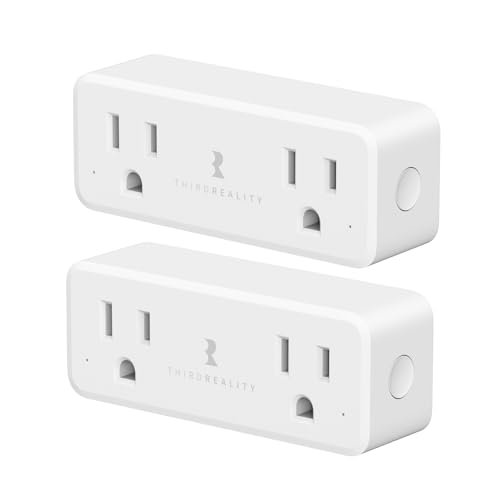
- Smart plugs and energy meters
- Thermostats with zoning support
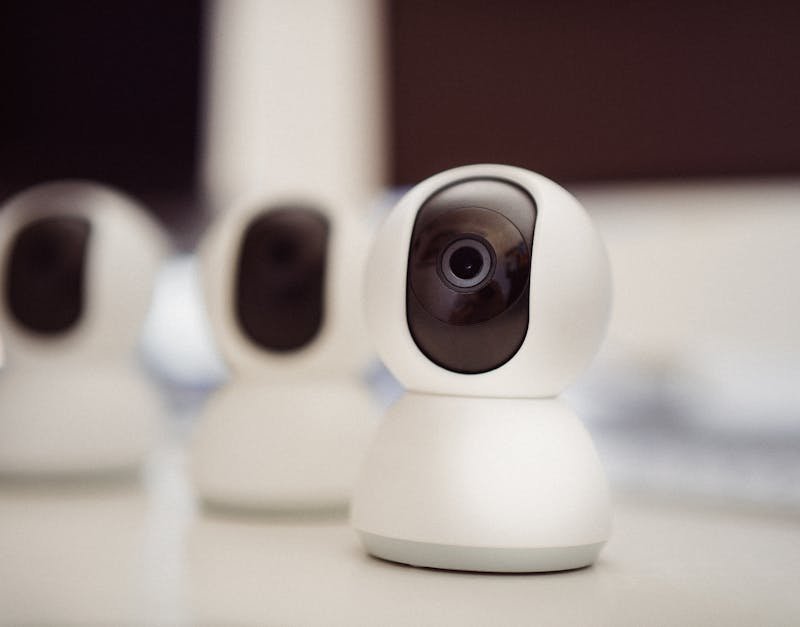
- Cameras and doorbells with privacy-friendly features
- Reliable hub or bridge with Thread support
Examples of current 2025-era device categories across ecosystems to guide selection (generic product types): a Matter-certified hub, Thread-enabled lights, temperature and occupancy sensors, energy-monitoring plugs, and cameras with local processing options. Focus on devices that offer clear privacy settings, transparent data practices, and predictable software update cadences. Prioritize products with robust, verifiable security updates and straightforward configuration flows that work well with your existing ecosystem.
Discover the latest in innovative technology tailored for modern adults by visiting Best High Tech Gadgets for Adults. This dedicated online platform offers in-depth reviews, insightful comparisons, and expert recommendations on cutting-edge gadgets like laser tape measures, waterproof travel backpacks, Swiss watches, and makeup train cases—perfect for those who demand high performance and style. By exploring their curated content now, you’ll gain the knowledge to choose the perfect high-tech tools that elevate your daily life and keep you ahead of the curve. Don’t wait—click through today and empower yourself with the best in adult-focused tech innovation!