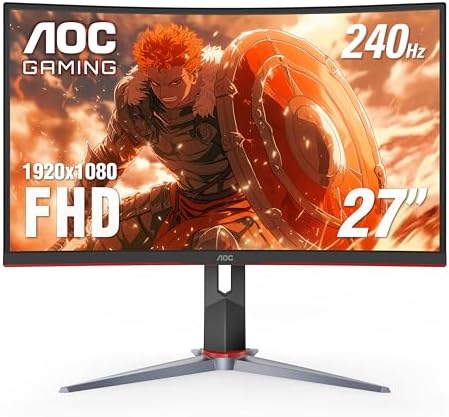
The 7 Best Gaming Monitors for Xbox Series X in 2025 (Ranked for Gamers)

The 7 Best Gaming Monitors for Xbox Series X in 2025 (Ranked for Gamers)

You've got the powerhouse console, the Xbox Series X, capable of delivering breathtaking 4K graphics at a buttery-smooth 120 frames per second. But all that power is wasted if you're still playing on an old TV or a subpar monitor. To truly experience next-gen gaming, you need a display that can keep up. Finding the best gaming monitors for Xbox Series X isn't just about getting a bigger screen; it's about unlocking the console's full potential with features like HDMI 2.1, low input lag, and vibrant HDR.

This guide is here to cut through the noise. We've analyzed the tech, scoured user reviews, and ranked the top contenders to help you find the perfect monitor for your setup and budget. Whether you're a competitive esports player who needs every millisecond of advantage or a story-driven gamer who wants to be completely immersed in stunning virtual worlds, the right monitor is waiting for you. Let's get you plugged in and ready to play!

What to Know

  • HDMI 2.1 is Essential: To get the full 4K resolution at a 120Hz refresh rate on the Xbox Series X, a monitor with an HDMI 2.1 port is non-negotiable. It provides the necessary bandwidth for next-gen performance.
  • OLED vs. IPS: OLED panels offer perfect blacks, infinite contrast, and incredible response times, making them the top choice for visual quality. IPS panels are a fantastic alternative, offering great colors and viewing angles, often at a more affordable price.
  • Resolution Sweet Spot: While 4K is the gold standard for visual fidelity, 1440p (QHD) monitors are an excellent middle ground. They provide a sharp image while making it easier for many games to maintain a high and stable 120 FPS.
  • Speed Matters: Look for a monitor with a 1ms response time or less and low input lag. This minimizes motion blur and ensures your controller inputs feel instantaneous, which is critical for fast-paced games.

What Makes a Great Gaming Monitor for Xbox Series X?

Before diving into specific models, it's crucial to understand the key features that separate the best monitors for Xbox X from the rest. The console has specific capabilities, and your monitor needs to be able to match them. It's a symphony of technology where every component plays a vital part.

First, consider the panel type. This is the core technology behind the screen and has the biggest impact on image quality. There are three main types you'll encounter:

  • OLED (Organic Light Emitting Diode): This is the king of image quality. Each pixel creates its own light, so when a pixel needs to be black, it simply turns off completely. This results in perfect black levels, infinite contrast, and colors that pop off the screen. OLEDs also have near-instantaneous response times, eliminating ghosting and motion blur.
  • IPS (In-Plane Switching): IPS panels are the workhorses of the monitor world. They are celebrated for their excellent color accuracy and wide viewing angles, meaning the picture looks great even if you're not sitting directly in front of it. While their contrast can't match OLEDs, modern IPS displays offer a fantastic, vibrant gaming experience and are generally more affordable.
  • VA (Vertical Alignment): VA panels are the middle ground. Their biggest strength is their contrast ratio, which is typically 3-5 times better than an IPS panel. This means deeper blacks and a more dynamic image in dark scenes. However, they can sometimes have slower response times, leading to some motion blur in the fastest-paced games.

Beyond the panel, features like HDR (High Dynamic Range) are vital. HDR allows for a wider range of brightness and color, making highlights brighter and shadows more detailed. The Xbox Series X fully supports HDR10, so a monitor with good HDR performance will make your games look significantly more realistic and immersive. Look for certifications like DisplayHDR 400, 600, or 1000—the higher the number, the better the HDR experience.

Finally, don't forget Variable Refresh Rate (VRR), specifically AMD FreeSync, which the Xbox supports. VRR syncs the monitor's refresh rate to the console's frame rate in real-time. This eliminates screen tearing and stuttering, resulting in a much smoother and more consistent gameplay experience, especially when the frame rate fluctuates.

Resolution vs. Refresh Rate: Finding Your Sweet Spot

One of the biggest decisions you'll make is choosing between prioritizing resolution or refresh rate. The Xbox Series X is a versatile machine that can target different performance goals, and your monitor choice should reflect how you want to play. This is where the debate between 4K, 1440p, and 120Hz comes into play.

4K (3840×2160): The Visual Showcase
A 4K monitor offers four times the pixels of a 1080p display, resulting in an incredibly sharp and detailed image. For single-player, story-driven games like Cyberpunk 2077 or Starfield, the level of detail in a 4K resolution is simply breathtaking. You'll see finer textures, clearer distant objects, and a more lifelike world. The ultimate goal for many is 4K at 120Hz, which provides both stunning clarity and exceptional smoothness.

1440p (2560×1440): The Competitive Edge
While 4K is beautiful, pushing that many pixels at 120 frames per second is demanding, and not all games can achieve it. This is where 1440p (or QHD) shines. It's a significant step up in sharpness from 1080p but is less graphically intensive than 4K. This allows the Xbox Series X to more consistently hit and maintain 120 FPS in competitive titles like Call of Duty, Halo Infinite, or Fortnite, giving you a tangible advantage with smoother motion and faster reaction times.

120Hz: The Smoothness Factor
The refresh rate, measured in Hertz (Hz), is how many times per second the screen updates the image. The standard for older consoles was 60Hz, but the Xbox Series X targets 120Hz. The difference is night and day. A 120Hz refresh rate makes motion look incredibly fluid, reduces input lag, and makes aiming and tracking targets feel more responsive.

Once you experience 120Hz gaming, it's very hard to go back to 60Hz.

So, what's the verdict? If you primarily play visually-rich, single-player games and want the absolute best image quality, a 4K 120Hz monitor is your target. If you're a competitive player who values frame rate and responsiveness above all else, a 1440p 120Hz+ monitor is arguably the smarter choice. Both are fantastic options that leverage the power of the console in different ways.

The 7 Best Gaming Monitors for Xbox Series X in 2025

Alright, let's get to the main event! We've tested, researched, and compiled the definitive list of the top Xbox Series X monitors available today. Each one offers a unique combination of features, performance, and price to fit different types of gamers.

1. ASUS ROG Swift OLED PG32UCDM

If you're looking for the absolute best visual experience with no compromises, this is it. The ASUS ROG Swift OLED PG32UCDM is a masterpiece of display technology. Its 32-inch 4K QD-OLED panel delivers the stunning picture quality that only OLED can provide: perfect, inky blacks, vibrant colors that seem to leap off the screen, and an infinite contrast ratio that makes HDR content look spectacular.

For Xbox Series X gamers, it checks every box. It has two HDMI 2.1 ports, allowing you to get the full 4K 120Hz experience. The response time is a blistering 0.03ms, which means motion is perfectly clear with zero ghosting or blur. This monitor makes every game, from the fast-paced action of DOOM Eternal to the gorgeous landscapes of Assassin's Creed Valhalla, look its absolute best.

Of course, this level of premium performance comes at a premium price. But if you want the pinnacle of gaming monitor technology to pair with your top-tier console, the PG32UCDM is in a class of its own.

Pros

  • Stunning QD-OLED Panel: Unbeatable contrast, perfect blacks, and vibrant colors.
  • Excellent Motion Clarity: Near-instantaneous response time eliminates all motion blur.
  • Full HDMI 2.1 Support: Unlocks 4K at 120Hz on the Xbox Series X.

Cons

  • Very Expensive: This is a top-tier monitor with a price tag to match.
  • Potential for Burn-In: Like all OLEDs, there is a risk of permanent image retention over time, though ASUS includes features to mitigate this.

2. Gigabyte M32U

For years, the Gigabyte M32U has been the go-to recommendation for console gamers, and for good reason. It offers a fantastic combination of high-end features at a price that is far more accessible than the premium OLEDs. It's arguably the best value 4K gaming monitor on the market for the Xbox Series X.

The M32U features a beautiful 32-inch 4K IPS panel that delivers sharp details and great color accuracy. It's equipped with HDMI 2.1 ports, so you get that crucial 4K 120Hz support. Its input lag is incredibly low, ensuring a responsive feel in every game you play. It even includes a built-in KVM switch, which is a handy feature if you also plan to use it with a PC.

While its HDR performance isn't as breathtaking as an OLED, it's still very good for an IPS panel and adds a nice pop to supported games. If you want a large, feature-packed 4K 120Hz monitor without completely breaking the bank, the Gigabyte M32U remains an outstanding choice.

Pros

  • Excellent Value: Delivers premium 4K 120Hz features at a competitive price.
  • Low Input Lag: Provides a highly responsive gaming experience.
  • Great Connectivity: Includes HDMI 2.1 and a useful KVM switch.

Cons

  • Mediocre HDR: Its HDR brightness and contrast can't compete with OLED or higher-end LED displays.
  • Average Contrast Ratio: Like most IPS panels, blacks can look a bit gray in a dark room.

3. Sony INZONE M9

Designed by Sony with consoles in mind, the INZONE M9 is a fantastic monitor that works beautifully with both the PlayStation 5 and the Xbox Series X. It has a unique aesthetic that matches the PS5, but its feature set is perfect for any modern console. It's a 27-inch 4K monitor with a fast 144Hz refresh rate and, most importantly, HDMI 2.1 ports.

What sets the M9 apart is its Full Array Local Dimming (FALD) backlight. This technology allows it to produce much better contrast and HDR performance than a typical IPS monitor. It makes bright highlights pop while keeping dark areas deep, creating a very dynamic and impressive image. It also has excellent color accuracy and the low input lag needed for serious gaming.

As a monitor from the makers of PlayStation, it has some unique features for that console, like Auto HDR Tone Mapping. However, it fully supports all the key features of the Xbox Series X, including 4K, 120Hz, and VRR, making it a brilliant all-around choice for console gamers.

Pros

  • Excellent HDR Performance: Full Array Local Dimming provides great contrast and brightness.
  • Perfect for Consoles: Designed from the ground up for PS5 and Xbox Series X.
  • Sharp 4K Image: The 27-inch screen size provides a very high pixel density.

Cons

  • Only 96 Dimming Zones: While good, it can sometimes produce blooming or halo effects around bright objects.
  • Stand is a Bit Bulky: The tripod-style stand takes up a fair amount of desk space.

4. Samsung Odyssey G7 (G70B)

Samsung's Odyssey line has a stellar reputation in the gaming world, and the G70B model is a superb mid-range option for Xbox Series X owners. This monitor packs a 28-inch 4K IPS panel with a 144Hz refresh rate and HDMI 2.1, delivering the core experience you need for next-gen gaming.

The image quality is strong, with vibrant colors and the crisp detail you'd expect from a 4K display. It fully supports 120Hz output from the Xbox Series X and has low input lag for responsive gameplay. What makes the G70B interesting is its built-in Tizen Smart TV platform. This means you can access streaming apps like Netflix, YouTube, and Xbox Cloud Gaming directly from the monitor without even turning your console on.

It's a versatile display that acts as both a high-performance gaming monitor and a smart TV. If you're looking for a monitor that can pull double duty in a dorm room or bedroom, the Samsung Odyssey G70B is an incredibly compelling package.

Pros

  • Smart TV Features: Built-in streaming apps add a ton of versatility.
  • Solid Gaming Performance: Delivers a sharp 4K 120Hz experience.
  • Good Value Proposition: Offers a lot of features for its price point.

Cons

  • Edge-Lit Dimming: HDR performance is just average.
  • Smart Hub Can Be Slow: The built-in smart interface can sometimes feel sluggish.

5. LG UltraGear 27GR93U-B

Finding a reliable 4K 120Hz monitor on a tighter budget can be tough, but LG's UltraGear 27GR93U-B is one of the best affordable gaming monitors for Xbox. It provides all the essential next-gen features without some of the expensive extras, making it a fantastic entry point into high-performance console gaming.

You get a 27-inch 4K IPS panel that's sharp and colorful, along with the all-important HDMI 2.1 ports to enable 120Hz gameplay. LG is known for its fast IPS panels, and this one is no exception, offering great response times and low input lag. It's a no-frills monitor that focuses purely on delivering a great gaming experience.

Its HDR performance is basic, and it lacks features like a KVM switch or built-in speakers, but it nails the fundamentals. If your priority is getting a smooth and responsive 4K 120Hz picture for your Xbox without spending a fortune, the LG 27GR93U-B is an easy recommendation.

Pros

  • Affordable 4K 120Hz: One of the best-priced monitors with full HDMI 2.1 support.
  • Fast Response Time: Great motion handling for an IPS panel.
  • Great SDR Picture Quality: Colors are vibrant and accurate out of the box.

Cons

  • Poor HDR: Don't buy this monitor for its HDR capabilities.
  • Low Contrast Ratio: Blacks will appear gray in a dark room.

6. Alienware AW2725DF

For the competitive gamer who prioritizes speed and smoothness over raw resolution, the Alienware AW2725DF is a dream come true. This monitor features a 27-inch 1440p (QHD) QD-OLED panel. You get the perfect blacks, infinite contrast, and vibrant colors of OLED, but at a resolution that makes it easier for the Xbox Series X to consistently pump out 120 FPS.

This monitor is all about motion clarity. The combination of the OLED panel's instant response time and the 1440p resolution means you get an incredibly clean and fluid image in the fastest-moving games. It makes tracking opponents in shooters or reacting to split-second events feel effortless. The HDR performance is also phenomenal, thanks to the QD-OLED technology.

While it doesn't have HDMI 2.1, its HDMI 2.0 ports have enough bandwidth to support 1440p at 120Hz with VRR, which is exactly what you need for the Xbox Series X. If you're a competitive player, this is one of the top Xbox Series X monitors you can buy.

Pros

  • Incredible Motion Clarity: Perfect for competitive, fast-paced games.
  • Stunning QD-OLED Picture: Amazing contrast and color for immersive gaming.
  • Supports 1440p @ 120Hz: The sweet spot for console performance.

Cons

  • No HDMI 2.1: Cannot do 4K at 120Hz, but that's not its purpose.
  • Text Clarity Can Be an Issue: The subpixel layout can cause minor color fringing on text, though it's not noticeable in games.

7. The Portable Monitor

Sometimes, your gaming setup needs to be as mobile as you are. For those who travel, have limited space, or want a second screen for their console, The Portable Monitor is a fantastic and flexible solution. This isn't your typical desk-bound display; it's a lightweight, slim screen that you can take anywhere.

These monitors connect directly to your Xbox Series X via HDMI and are powered by USB, making setup a breeze. While you won't find 4K 120Hz specs here, modern portable monitors offer crisp 1080p or even 1440p resolutions with 60Hz refresh rates, which is perfect for playing on the go. They provide a massive upgrade over trying to play on a tiny laptop screen or hotel TV.

Imagine setting up a full Xbox gaming session in your hotel room, at a friend's house, or even in a different room of your own home without having to lug a heavy monitor around. It's the ultimate accessory for the flexible gamer. If you need a display that can keep up with your lifestyle, The Portable Monitor is an incredibly practical choice.

Pros

  • Extremely Portable: Lightweight and slim design for gaming anywhere.
  • Easy Setup: Connects with just HDMI and USB power.
  • Versatile: Can also be used as a second screen for a laptop.

Cons

  • Lower Specs: Typically limited to 1080p/1440p at 60Hz.
  • Smaller Screen Size: Most models are between 15 and 17 inches.

HDMI 2.1 Explained: Why It's Non-Negotiable for Xbox Series X

We've mentioned HDMI 2.1 throughout this guide, but what exactly is it, and why is it so important for gaming monitors for Xbox? Think of it as a superhighway for data. The previous standard, HDMI 2.0, was like a two-lane road—it had enough bandwidth for 4K resolution at 60Hz, but not enough for 4K at 120Hz.

HDMI 2.1 drastically increases the bandwidth from 18 Gbps to a massive 48 Gbps. This four-lane superhighway has more than enough room to transmit the huge amount of data required for a 4K signal that's refreshing 120 times per second, along with HDR and audio information. Without HDMI 2.1, your Xbox Series X will be limited to either 4K at 60Hz or a lower resolution like 1440p at 120Hz.

But HDMI 2.1 is more than just bandwidth. It also enables other crucial gaming features:

  • Variable Refresh Rate (VRR): As mentioned earlier, this syncs the display to the console's frame rate, eliminating screen tearing for smoother gameplay.
  • Auto Low Latency Mode (ALLM): When your Xbox is connected, ALLM automatically tells the monitor to switch to its fastest 'Game Mode'. This disables any unnecessary picture processing to reduce input lag, so you don't have to remember to do it manually.

When you're shopping for a monitor, be sure to check the specs carefully. Some monitors might claim to have a 120Hz+ refresh rate but only have HDMI 2.0 ports. These displays can only achieve their highest refresh rates over a DisplayPort connection, which the Xbox Series X does not have. For the best, no-compromise experience, a monitor with at least one full-bandwidth HDMI 2.1 port is the only way to go.

Curved vs. Flat Monitors: Which Is Better for Console Gaming?

The debate between curved and flat screens is a hot topic in the PC gaming world, but it's just as relevant for console gamers. Both styles have distinct advantages, and the best choice often comes down to personal preference and the types of games you play.

Curved Monitors: The Immersion Kings
Curved monitors are designed to wrap the image around your field of view, creating a more immersive and panoramic experience. The curve helps to fill your peripheral vision, which can make you feel more like you're in the game world. This is especially effective in first-person games, racing simulators, and flight sims. The curve can also reduce eye strain, as it keeps the entire screen at a more consistent distance from your eyes.

Flat Monitors: The Practical All-Rounders
Flat monitors are the traditional standard for a reason. They are versatile, practical, and suffer from no image distortion. For strategy games, competitive shooters where geometric accuracy is key, or for general use outside of gaming, a flat screen is often preferred. They are also typically less expensive than their curved counterparts and are easier to wall-mount or use in a multi-monitor setup.

So, which should you choose? If your primary goal is maximum immersion in single-player adventures and you'll be sitting relatively close to the screen, a curved monitor is a fantastic choice. If you play a wide variety of genres, value geometric precision, or plan to use your monitor for work and productivity as well as gaming, a flat monitor is the safer, more versatile bet.

Pro Tip: The aggressiveness of the curve is measured in 'R' (e.g., 1800R, 1000R). A lower number means a more pronounced curve. For most desk setups, a gentle 1800R curve is a great starting point for immersion without being too distracting.

Setting Up for Success: How to Optimize Your Monitor for Xbox Series X

Getting one of the best gaming monitors for your Xbox is only half the battle. To get the most out of it, you need to make sure your console's settings are configured correctly. It only takes a few minutes and can make a world of difference. Here’s a quick step-by-step guide:

  1. Navigate to TV & Display Options: On your Xbox dashboard, press the Xbox button, go to 'Profile & system', then 'Settings', then 'General', and finally select 'TV & display options'.

  2. Set Your Resolution and Refresh Rate: In this menu, you'll see options for 'Resolution' and 'Refresh rate'. Set the Resolution to '4K UHD'. Then, set the Refresh rate to '120 Hz'. If your monitor and cable support it, the option will be available. The Xbox will test the setting, and you just need to confirm it.

  3. Enable Gaming Features: Go into the 'Video modes' submenu. Here, you'll find a series of checkboxes. Make sure to check 'Allow variable refresh rate' (VRR) to enable FreeSync and prevent screen tearing. Also, check 'Allow auto low-latency mode' (ALLM) so your monitor always uses its fastest setting for gaming.

  4. Configure HDR: Ensure 'Allow 4K', 'Allow HDR10', and 'Auto HDR' are all checked. Then, go to the 'Calibrate HDR for games' tool. This will walk you through a series of patterns to set the perfect brightness and darkness levels for your specific monitor, ensuring your HDR content looks exactly as the game developers intended.

By following these simple steps, you'll ensure that your Xbox Series X is outputting the best possible signal and that your new monitor is displaying it to its full potential. It’s the final, crucial step to unlocking that true next-gen experience.

Beyond the Screen: Building Your Ultimate Xbox Gaming Station

A top-tier monitor is the centerpiece of your gaming setup, but it's not the only piece. To create a truly immersive and comfortable gaming environment, you need to consider the components around the screen. This is about building a cohesive battle station where you can play for hours in complete comfort.

Ergonomics and Comfort: Stands, Mounts, and Chairs

Most monitors come with a basic stand, but upgrading your setup can make a huge difference. A VESA mount is a standardized mounting pattern on the back of most displays. Using a VESA-compatible monitor arm allows you to position your screen at the perfect height, depth, and angle. This not only improves your viewing experience but also promotes better posture, reducing neck and back strain during long gaming sessions.

Of course, the foundation of any comfortable setup is the chair. Sitting on a dining chair or a cheap office chair will quickly lead to discomfort. A dedicated gaming chair is designed for long-term support. Brands like TechniSport and Secretlab offer chairs with adjustable armrests, lumbar support, and reclining capabilities, allowing you to dial in the perfect ergonomic position.

Investing in a quality chair is an investment in your health and your gaming endurance.

Immersive Sound to Match the Visuals

The built-in speakers on even the best gaming monitors are often an afterthought. They lack the power, clarity, and positional awareness needed for immersive gaming. To truly complete your setup, you need a great audio solution. A quality gaming headset is essential for competitive play, allowing you to hear enemy footsteps and pinpoint their location.

For an incredible audio experience, consider high-fidelity in-ear monitors or headphones from a brand like BASN Audio. Their products are designed to deliver crisp, detailed sound that can bring game worlds to life. Whether it's the roar of an engine, the subtle rustling of leaves, or the epic swell of a cinematic score, great audio is just as important as great visuals.

What the Gaming Community Says: Top-Rated Monitors for Xbox X

Lab tests and professional reviews are great, but sometimes the most valuable insights come from the people who use these monitors every day: the gaming community. On forums like Reddit, users are constantly discussing their experiences, and a few models consistently rise to the top as community favorites.

In a discussion on r/XboxSeriesX, users frequently praise the Gigabyte M-series monitors (like the M32U and M28U) for hitting the perfect balance of price and performance. One user noted, "The M28U is probably the best bang for your buck for a 4K 120Hz monitor. It just works perfectly with the Series X right out of the box." This sentiment is echoed across many threads, highlighting its reliability and value.

OLED monitors, particularly from LG and Alienware, are also a hot topic. While users acknowledge the price, the consensus is that the picture quality is transformative. A comment in another thread reads, "Once you game on an OLED, you can't go back. The contrast and response time are just on another level." This reflects the 'wow' factor that OLED technology brings to the gaming experience.

These real-world perspectives confirm that the top contenders deliver on their promises and are beloved by the players who use them.

Frequently Asked Questions (FAQ)

Is a 4K monitor worth it for Xbox Series X?

Absolutely. The Xbox Series X was designed with 4K gaming as its primary goal. A 4K monitor allows you to see the incredibly detailed textures and sharp images that developers intended. For visually stunning single-player games, the difference between 1080p and 4K is immense.

If your budget allows for a 4K monitor with HDMI 2.1, it is definitely a worthwhile investment to get the most out of your console.

Is 4K or 1440p better for gaming?

This depends on your priorities. 4K offers the best visual fidelity and sharpness, making it ideal for immersive, story-driven games. 1440p is less graphically demanding, which makes it easier for the console to maintain a high and stable 120 FPS, making it the preferred choice for competitive gamers who value performance and responsiveness above all else. Both are excellent choices for the Xbox Series X.

Is a TV or gaming monitor better for the Xbox Series X?

Gaming monitors are generally better for a dedicated gaming setup. They typically have much lower input lag and faster response times than TVs, which is crucial for responsive gameplay. They also offer features like FreeSync and higher refresh rates more commonly. However, high-end TVs (especially OLEDs) have closed the gap significantly and can be a great option if you also want a large screen for watching movies from your couch.

Should I get a 240Hz monitor for Xbox Series X?

No, it's not necessary. The Xbox Series X has a maximum output of 120Hz (or 120 FPS). While a 240Hz monitor will work, the console cannot send it a signal faster than 120Hz. You would be paying for performance that you cannot use.

A 120Hz or 144Hz monitor is the perfect match for the Xbox Series X's capabilities.

Why do pro gamers use monitors?

Pro gamers use monitors for one primary reason: speed. Monitors have significantly lower input lag than almost any television. Input lag is the delay between you pressing a button on your controller and the action appearing on screen. In a competitive environment where milliseconds matter, minimizing this delay provides a tangible competitive advantage.

Final Thoughts

Choosing the right display is the most impactful upgrade you can make for your Xbox Series X. It transforms the console from a powerful box under your desk into a window to incredible new worlds. The best gaming monitors for Xbox Series X bridge the gap between potential and reality, delivering the fluid motion and stunning visuals that next-gen gaming promises.

For those who want the absolute best without compromise, an OLED like the ASUS ROG Swift OLED PG32UCDM offers a visual experience that is second to none. If you're looking for the perfect blend of performance and value, the Gigabyte M32U remains a top-tier choice that delivers the full 4K 120Hz experience at a more reasonable price. And for gamers on the move, The Portable Monitor provides an unbeatable combination of flexibility and convenience.

Ultimately, the perfect monitor is the one that fits your games, your space, and your budget. By focusing on the key features—HDMI 2.1, a high refresh rate, and low response times—you can't go wrong. Now go get that perfect screen, hook up your console, and see what you've been missing!

5 Best Gaming Monitors for Xbox Series X (2025): 4K & 1440p Picks

5 Best Gaming Monitors for Xbox Series X (2025): 4K & 1440p Picks

You’ve got the powerhouse console, the Xbox Series X, capable of delivering breathtaking 4K graphics and buttery-smooth 120 frames per second. But are you actually seeing all that power. If you’re still gaming on an old TV or a basic office monitor, you’re leaving a massive amount of performance on the table. Finding one of the best gaming monitors for the Xbox Series X is the single most important upgrade you can make to truly experience next-gen gaming the way it was intended.

It’s time to unlock the full visual potential of your console.

This guide is your ultimate resource for navigating the world of gaming displays for the Xbox Series X. We’re breaking down everything from must-have features like HDMI 2.1 to the heated debate between 4K and 1440p, all to help you find the perfect screen for your budget and playstyle. Get ready to see your favorite games in a whole new light!

What to Know

  • HDMI 2.1 is Key: To get the most out of your Xbox Series X, you need a monitor with an HDMI 2.1 port. This is the only way to achieve the holy grail of 4K resolution at a 120Hz refresh rate.
  • Resolution Isn’t Everything: While 4K offers incredible detail, a 1440p monitor can provide a fantastic, high-frame-rate experience for a lower price, making it a performance sweet spot for many gamers.
  • Speed Matters: Look for a refresh rate of at least 120Hz and a response time of 5ms or less. These specs ensure your gameplay is fluid, responsive, and free of distracting motion blur, which is crucial for competitive games.
  • Good HDR is a Must: High Dynamic Range (HDR) dramatically improves contrast and color, making games look more vibrant and realistic. However, look for monitors with at least a DisplayHDR 400 certification, as poor HDR can be worse than none at all.

What Makes a Gaming Monitor Perfect for the Xbox Series X?

Shop On Amazon Now

Choosing one of the top Xbox Series X monitors isn’t just about picking the biggest screen with the highest numbers. The Xbox Series X has specific features designed to create an optimal gaming experience, and your monitor needs to be able to support them. Without the right tech, you’re essentially driving a sports car in a school zone—you have the power, but you can’t use it.

The most critical feature to look for is HDMI 2.1. This latest HDMI standard provides the necessary bandwidth to transmit a 4K signal at 120 frames per second (fps). Older HDMI 2.0 ports are limited to 4K at 60Hz or 1440p at 120Hz. If you want the absolute best visual fidelity and smoothness combined, HDMI 2.1 is non-negotiable.

Beyond that, two other technologies are vital for console gaming: Variable Refresh Rate (VRR) and Auto Low Latency Mode (ALLM). The Xbox Series X supports AMD FreeSync, a popular form of VRR. This technology synchronizes the monitor’s refresh rate with the console’s frame rate in real-time. This eliminates screen tearing and stuttering, resulting in a much smoother visual experience, especially when frame rates fluctuate.

ALLM automatically puts your monitor into its fastest, low-lag “game mode” when you fire up your console, ensuring you always have the most responsive experience without fiddling with settings.

Choosing Your Battleground: 4K vs. 1440p Resolution

One of the biggest decisions you’ll make is choosing the right resolution. The two main contenders for the best monitors for Xbox are 4K (3840×2160) and 1440p (2560×1440), also known as QHD. There’s no single right answer; the best choice depends entirely on your priorities and budget.

4K (UHD): The Visual Showcase
A 4K monitor is the ultimate choice for graphical fidelity. The sheer pixel density creates incredibly sharp, detailed, and immersive worlds. For single-player, story-driven games like Cyberpunk 2077 or Assassin’s Creed Valhalla, the visual difference is stunning. You’ll notice finer textures, clearer distant objects, and an overall crispness that 1440p can’t quite match.

If your goal is to be completely absorbed in a game’s atmosphere and you want the most cinematic experience possible, 4K is the way to go. The downside. 4K monitors, especially those with high refresh rates and HDMI 2.1, are more expensive.

1440p (QHD): The Performance Sweet Spot
On the other hand, 1440p resolution has become the darling of the gaming community for a reason. It offers a significant visual upgrade over 1080p without the demanding hardware requirements (and cost) of 4K. For the Xbox Series X, this means it’s easier for the console to maintain a stable 120 fps in more games at 1440p than at 4K. For competitive players who prioritize frame rate and responsiveness in titles like Call of Duty: Warzone or Halo Infinite, a 1440p 120Hz+ monitor is often the smarter choice.

You get incredibly smooth gameplay and a sharp image, all at a more accessible price point.

Speed is Everything: Refresh Rates and Response Times Explained

When it comes to gaming displays for Xbox Series X, resolution is only half the story. The other half is speed, which is defined by two key specs: refresh rate and response time. These numbers directly impact how smooth and clear your game looks in motion, and they can be the difference between victory and defeat in fast-paced games.

Refresh Rate (Hz)
The refresh rate, measured in Hertz (Hz), tells you how many times per second the monitor can update the image on the screen. A 60Hz monitor updates 60 times per second, while a 120Hz monitor updates 120 times per second. The Xbox Series X can output up to 120 frames per second, so to see that benefit, you need a monitor with at least a 120Hz refresh rate. The difference is night and day.

Gameplay at 120Hz is incredibly fluid, animations are smoother, and your input feels more immediate and connected. While you might see 240Hz monitors on the market for PC gaming, the Xbox Series X is capped at 120Hz, so there’s no need to spend extra for a higher refresh rate for your console.

Response Time (ms)
Response time, measured in milliseconds (ms), is how quickly a pixel can change from one color to another (typically gray-to-gray, or GTG). A slow response time can lead to motion blur or “ghosting,” where you see a faint trail behind moving objects. This can be incredibly distracting and make it difficult to track fast-moving targets. For gaming, you want a response time of 5ms or lower.

The best gaming monitors often boast a 1ms response time, which virtually eliminates motion blur and ensures the image remains sharp and clear, even during the most chaotic action sequences.

Pro Tip: Don’t confuse response time with input lag! Input lag is the delay between you pressing a button and the action appearing on screen. While related, they are different. Most modern gaming monitors have very low input lag, but enabling your monitor’s “Game Mode” is the best way to ensure it’s as low as possible.

The Top 5 Best Gaming Monitors for Xbox Series X in 2025

Shop On Amazon Now

Alright, let’s get to the main event! We’ve analyzed the specs, scoured reviews, and identified the top monitors that will make your Xbox Series X sing. Here are our picks for every type of gamer.

1. Gigabyte M32U: The Best Overall 4K Monitor

When it comes to the perfect blend of features, performance, and price, the Gigabyte M32U is an absolute champion. This 32-inch 4K monitor has everything you need to take full advantage of the Xbox Series X. It features two HDMI 2.1 ports, meaning you can hit that glorious 4K at 120Hz target with ease. The IPS panel delivers fantastic colors and wide viewing angles, making your games look vibrant and beautiful from any position.

What really sets the M32U apart is its versatility. It includes a built-in KVM switch, which is a huge bonus if you also use a PC or laptop at your desk. With excellent response times and low input lag, it’s a beast for both competitive and cinematic gaming. It’s the complete package and one of the best monitors for Xbox you can buy today.

Pros

  • Full HDMI 2.1 support for 4K @ 120Hz
  • Beautiful 32-inch IPS display with great color accuracy
  • Fast response times for clear motion

Cons

  • HDR performance is decent but won’t blow you away
  • Local dimming feature is mediocre

2. Samsung Odyssey G7 (G70B): The 1440p Performance King

If you prioritize frame rates over raw pixel count, the Samsung Odyssey G7 is your weapon of choice. This monitor is a favorite among competitive gamers for a reason. While this is the flat IPS version (not to be confused with the older curved VA model), it still packs a punch with a 1440p resolution and a blazing-fast 165Hz refresh rate (which easily handles the Xbox’s 120Hz output).

The G70B model includes HDMI 2.1, so you get all the next-gen features like VRR and 1440p @ 120Hz support. Its response times are among the best in its class, delivering exceptionally clear motion with no ghosting. The result is a hyper-responsive and incredibly smooth gaming experience that can give you a real edge in fast-paced shooters and racing games.

Pros

  • Excellent motion handling and fast response time
  • Supports 1440p @ 120Hz with VRR
  • Bright and colorful IPS panel

Cons

  • Some users report issues with quality control
  • Lower contrast ratio typical of IPS panels

3. ASUS TUF Gaming VG289Q: The Best Budget 4K Option

Want to experience the sharpness of 4K without breaking the bank? The ASUS TUF Gaming VG289Q is an incredible value proposition. This 28-inch 4K monitor delivers a stunningly crisp image for a fraction of the price of its high-refresh-rate cousins. The trade-off is that it’s limited to a 60Hz refresh rate via its HDMI 2.0 ports.

While you won’t get 120fps gameplay, 4K at 60fps is still a fantastic and immersive experience, especially for adventure, RPG, and strategy games where reaction time is less critical. The IPS panel provides rich colors, and it even supports FreeSync to prevent screen tearing. If you’re a cinematic gamer on a budget, this is one of the best deals in gaming.

Pros

  • Excellent price for a 4K resolution monitor
  • Sharp image with great color reproduction
  • Solid build quality for its price point

Cons

  • Limited to a 60Hz refresh rate
  • HDR performance is very basic

4. LG UltraGear 27GR95QE-B: The Ultimate OLED Experience

If money is no object and you demand the absolute best picture quality, look no further than an OLED monitor. The LG UltraGear 27GR95QE-B is a game-changer. Unlike traditional LCD monitors, OLED panels have self-lit pixels, which means they can achieve perfect black levels and an infinite contrast ratio. The result is an image with breathtaking depth, vibrancy, and realism.

This 27-inch monitor combines a 1440p resolution with a lightning-fast 240Hz refresh rate and near-instantaneous response times. For your Xbox Series X, it will handle 1440p at 120Hz flawlessly. HDR content looks absolutely spectacular on this display, with highlights that pop and shadows that are truly black. It’s a premium experience with a premium price tag, but for visual purists, it’s worth every penny.

Pros

  • Stunning picture quality with perfect blacks and infinite contrast
  • Near-instantaneous response time for zero motion blur
  • Excellent HDR performance

Cons

  • Extremely expensive
  • Risk of permanent burn-in with static images over time

5. The Portable Monitor: Best for Gaming On the Go

What if your gaming setup isn’t confined to a desk? For gamers who travel, live in a dorm, or simply want a flexible secondary screen, The Portable Monitor is a fantastic and often overlooked solution. These lightweight, slim displays are designed to be taken anywhere, allowing you to set up an Xbox gaming session in minutes, wherever you are.

Most portable monitors connect via USB-C or Mini HDMI, making them perfectly compatible with the Xbox Series X (with the right adapter). While they typically come in 1080p or 1440p resolutions and are often capped at 60Hz, they provide a sharp, low-latency experience that is miles better than not being able to play at all. It’s the perfect companion for keeping up with your games while on vacation or for setting up a quick multiplayer match at a friend’s house.

Pros

  • Incredibly lightweight and easy to transport
  • Simple plug-and-play setup
  • A great solution for small spaces or travel

Cons

  • Typically limited to 60Hz refresh rates
  • Smaller screen size and lower brightness than desktop monitors

If you need a flexible gaming solution, check out The Portable Monitor on Amazon to see how it can fit into your lifestyle.

Budget vs. Premium: Is a High-End Monitor Worth It?

The price of gaming monitors can range from a couple of hundred dollars to well over a thousand. This huge gap often leaves gamers wondering: is a premium monitor really worth the extra cash? The answer is a definite maybe—it all comes down to what features you value most.

A budget monitor (typically under $300) will get the job done. You can easily find a 1080p or even a 1440p screen that supports a 120Hz refresh rate. However, manufacturers have to cut corners to hit that price point. You’ll likely get a panel with less accurate colors, lower peak brightness, and non-existent HDR performance.

The build quality might feel cheaper, and you’ll miss out on quality-of-life features like adjustable stands or USB hubs.

Step up to a premium monitor ($700+), and the differences become immediately apparent. You’re paying for superior panel technology like OLED or high-end IPS with Quantum Dot films, which deliver vastly better colors and contrast. HDR performance is a key differentiator; a premium monitor with a DisplayHDR 600 or 1000 certification will provide a true, impactful HDR experience. You also get better build quality, full ergonomic adjustments, more connectivity options, and a product that is generally more polished and reliable.

For gamers who spend hours in front of their screen and want the most immersive and visually stunning experience, the investment in a premium monitor is often well worth it.

Seeing is Believing: The Importance of HDR for Xbox Gaming

High Dynamic Range, or HDR, is one of the most significant advancements in display technology in years, and it’s a feature the Xbox Series X fully supports. In simple terms, HDR allows a monitor to display a much wider range of brightness and color than a standard display (SDR). This creates a more realistic and impactful image.

Think about a scene in a game where you’re looking out of a dark cave into a bright, sunlit landscape. On an SDR display, the bright areas might look washed out, or the dark areas might be crushed into a murky black with no detail. With good HDR, you can see all the intricate rock details inside the cave while the sunlit area outside remains bright and vibrant without losing detail. It makes bright explosions feel more intense and dark, spooky corridors feel more ominous.

The Xbox Series X supports the HDR10 standard. When shopping for a monitor, you’ll see VESA DisplayHDR certifications like DisplayHDR 400, 600, and 1000. These numbers indicate the monitor’s peak brightness in nits. A higher number generally means a better, more impactful HDR experience.

Be wary of monitors that claim HDR support without a certification, as their performance is often disappointing. A DisplayHDR 400 certification is a good entry point, while DisplayHDR 600 or higher is where HDR really starts to shine.

The Best Brands for Xbox Series X Gaming Monitors

Shop On Amazon Now

Navigating the sea of monitor brands can be confusing, but a few names consistently rise to the top for their quality and innovation in the gaming space. While personal preference plays a role, these brands have a proven track record of producing some of the best gaming displays for Xbox Series X.

  • LG: A true industry leader, especially known for its high-performance IPS panels and pioneering OLED display technology. LG’s UltraGear lineup is consistently praised for its fast response times and excellent color accuracy.
  • Samsung: A powerhouse in display technology, Samsung is famous for its vibrant QLED panels and its aggressive, immersive curved monitors in the Odyssey line. They often push the boundaries of brightness and contrast.
  • Gigabyte / AORUS: Gigabyte has made a huge splash in the monitor market by offering feature-packed displays at highly competitive prices. Their ‘M’ series monitors are known for their practicality and value, while the ‘AORUS’ line is aimed at high-end enthusiasts.
  • ASUS: A long-time favorite in the PC gaming community, ASUS offers a massive range of monitors under their TUF (budget-friendly) and ROG (premium) brands. They are known for excellent performance and gamer-centric features.
  • Dell / Alienware: Dell’s gaming monitors often provide a great balance of performance and price, while their Alienware brand is synonymous with premium, high-end gaming hardware with a distinct aesthetic and top-tier performance.

Size Matters: Finding the Perfect Monitor Size for Your Setup

Choosing the right monitor size is crucial for an immersive experience. The most popular sizes for desktop gaming are 27 inches and 32 inches, and each has its own advantages.

A 27-inch monitor is often considered the sweet spot for desktop gaming. At this size, a 1440p resolution provides excellent pixel density, resulting in a sharp and detailed image where you don’t need to use scaling. It’s also large enough to be immersive without requiring you to move your head to see the entire screen, which is important for competitive gaming where you need to see the whole HUD at a glance.

A 32-inch monitor offers a more cinematic and immersive experience. The larger screen fills more of your field of view, which is fantastic for single-player adventure and racing games. At this size, a 4K resolution is ideal to maintain a high pixel density and keep the image looking sharp. For some, a 32-inch screen can be too large for competitive play on a desk, but for a more relaxed, lean-back experience, it’s hard to beat.

No matter the size, your comfort is paramount. Long gaming sessions can lead to neck and back strain if your setup isn’t ergonomic. This is where a quality gaming chair becomes essential. A chair with proper lumbar support and adjustability, like those from Secretlab or TechniSport, ensures you can stay comfortable and focused on the game, not on your aching back.

Get Set, Go! How to Set Up Your Monitor for the Best Xbox Experience

So you’ve unboxed your shiny new monitor. Now what? Properly setting it up with your Xbox Series X is crucial to ensure you’re getting all the features you paid for. Here’s a quick guide to get you started.

Shop On Amazon Now

  1. Use the Right Cable and Port: First, make sure you’re using the Ultra High-Speed HDMI cable that came with your Xbox Series X. Connect it from the console to an HDMI 2.1 port on your monitor (it will usually be labeled). This is the only way to get 4K at 120Hz.
  2. Configure Xbox Display Settings: Turn on your Xbox and navigate to Settings > General > TV & display options. Here’s what to check:
    • Resolution: Set this to your monitor’s native resolution (e.g., 4K UHD or 1440p).
    • Refresh rate: Set this to 120Hz. If the option is grayed out, your monitor may not support it, or you might need to lower the resolution.
  3. Enable Gaming Features: Go to Settings > General > TV & display options > Video modes. Here you can enable key features:
    • Allow auto low-latency mode (ALLM): Check this box.
    • Allow variable refresh rate (VRR): Check this box to enable FreeSync and eliminate screen tearing.
    • Allow HDR10: If your monitor supports HDR, make sure this is checked.

Finally, consider your audio. While monitor speakers will work in a pinch, they rarely provide an immersive experience. For competitive gaming where hearing footsteps is critical, or for simply getting lost in a game’s soundtrack, a dedicated audio solution is a must. High-quality headphones or in-ear monitors like those from BASN Audio can deliver the detailed, directional sound you need.

What Real Gamers Think: User Reviews and Ratings

Lab tests and specs are great, but sometimes the most valuable insights come from fellow gamers who use these monitors every day. Scouring forums like Reddit provides a wealth of real-world feedback.

In a discussion on the r/XboxSeriesX subreddit, users consistently highlight the importance of HDMI 2.1 for future-proofing their setup. One user commented, “Don’t skimp on HDMI 2.1. Even if not many games use 4K/120 now, more will in the future. It’s the whole point of the console.” This sentiment is echoed across many threads, with gamers emphasizing that buying a monitor is a long-term investment.

Another common theme is the 1440p vs. 4K debate. A gamer in a thread about the Gigabyte M28U noted, “I went with 1440p/120Hz and have no regrets. The smoothness is more noticeable to me than the extra pixels from 4K, especially in shooters.” This reflects a growing consensus that for many, performance and fluidity trump absolute visual fidelity.

These firsthand accounts are invaluable for understanding the practical benefits of different features beyond the marketing hype.

Frequently Asked Questions About Xbox Series X Monitors

What gaming monitor is best for the Xbox Series X?

The best overall gaming monitor for most people is the Gigabyte M32U. It offers a fantastic 32-inch 4K display with full HDMI 2.1 support, allowing it to run games at 4K resolution and a 120Hz refresh rate. It combines excellent performance, great features, and a competitive price, making it the top choice for unlocking the full potential of the Xbox Series X.

Is it worth getting a 4K monitor for the Xbox Series X?

Yes, it is absolutely worth getting a 4K monitor if you prioritize visual fidelity and immersion. The Xbox Series X is designed for 4K gaming, and on a native 4K display, games look incredibly sharp and detailed. For single-player, story-driven games, the visual upgrade is significant and makes for a more cinematic experience. However, you’ll need to ensure it also has a 120Hz refresh rate and HDMI 2.1 to get the best of both worlds.

Is 4K or 1440p better for gaming?

Neither is definitively “better”; it depends on your priorities. 4K is better for visual quality, offering the sharpest, most detailed image possible. 1440p is often better for performance, as it’s less graphically demanding, allowing the Xbox Series X to more easily maintain a high and stable 120 frames per second. Competitive gamers often prefer 1440p for the smoother gameplay, while cinematic gamers prefer 4K for the stunning visuals.

Should I get a 240Hz monitor for Xbox Series X?

No, there is no need to get a 240Hz monitor specifically for the Xbox Series X. The console’s maximum output is capped at 120Hz (120 frames per second). While a 240Hz monitor will work perfectly fine, you won’t see any benefit from the higher refresh rate beyond 120Hz when playing on your console. It’s better to invest that money in other features like better HDR or a larger screen size.

Do you need a 120Hz monitor for Xbox Series X?

While you don’t strictly need a 120Hz monitor to use the Xbox Series X, it is highly recommended to experience one of its biggest advantages. A 120Hz monitor allows you to play supported games at up to 120 frames per second, which makes gameplay look and feel significantly smoother and more responsive than the old 60fps standard. If you play fast-paced or competitive games, the difference is substantial.

Final Thoughts: Choosing Your Ultimate Xbox Display

Choosing the right monitor is the final, crucial step in building an incredible next-gen gaming setup. Your Xbox Series X is a beast of a machine, and pairing it with a capable display ensures you’re not just playing games—you’re experiencing them. The leap from 60Hz to 120Hz is transformative, and the vibrant detail of 4K or the fluid performance of 1440p will make your favorite titles feel brand new.

Your decision ultimately comes down to what you value most. Do you crave the sharpest, most cinematic visuals. A 4K monitor like the Gigabyte M32U is your ticket. Do you prioritize silky-smooth frame rates for a competitive edge.

A 1440p performer like the Samsung Odyssey G7 is the way to go. And if your gaming life is on the move, a unique solution like The Portable Monitor ensures you never have to leave your games behind.

Whatever you choose, investing in one of the best monitors for Xbox is an investment in countless hours of immersive fun. Now go get that upgrade and see what you’ve been missing!

Exit mobile version