Camera Lenses for Sony: A 2026 Buyer’s Guide for Every Photographer

Bestseller #1
  • Large F1. 8 maximum aperture enables beautiful defocusing effects
  • 7-blade circular aperture creates beautiful defocused bokeh
  • Compact, lightweight design Ideal for full-frame e-mount cameras
Bestseller #2
  • Supreme lightweight portability that makes telephoto shooting fun
  • Uncompromising image quality with 15 elements in 10 groups that lets you focus on creativity
  • Up-close shooting performance (31.5″ / 1:9.4 Wide & 59.1″ / 1:5.1 Tele)
Bestseller #3
  • Telephoto zoom with outstanding corner-to-corner G lens resolution
  • Lightweight (22oz.) remarkably Easy to handle 5x super-telephoto zoom
  • 70-350Mm (105-525mm full-frame equiv.) super-telephoto zoom
$1,198.00

Camera Lenses for Sony: A 2026 Buyer’s Guide for Every Photographer

Stepping into the world of interchangeable lenses is one of the most exciting moments in any photographer’s journey. If you’ve got a Sony camera, you’re in for a treat. The ecosystem of camera lenses for Sony is massive, innovative, and packed with incredible options that can completely transform your photos from simple snapshots into breathtaking works of art. But with so many choices, from Sony’s own G Master series to fantastic third-party offerings, picking the right one can feel a little overwhelming.

That’s where we come in.

This guide is your roadmap to navigating the amazing world of Sony E-mount glass. We’ll break down all the technical jargon into simple terms, help you identify what you actually need based on what you love to shoot, and show you some of the best lenses available today. Get ready to find the perfect lens that will help you capture your vision!

What to Know

  • Match Your Sensor: The most crucial first step is matching your lens to your camera’s sensor. “FE” lenses are for full-frame cameras, while “E” lenses are designed for smaller APS-C sensors. You can use FE lenses on APS-C bodies, but not the other way around without consequences.
  • Prime vs. Zoom: Prime lenses have a fixed focal length (like 50mm) and typically offer sharper images and wider apertures, making them amazing in low light. Zoom lenses offer the versatility of multiple focal lengths in one package, perfect for travel and events.
  • Aperture is Key: The f-stop number (e.g., f/1.8, f/4) controls how much light the lens lets in. A lower number means a wider aperture, which is better for blurry backgrounds (bokeh) and shooting in dark conditions.
  • Third-Party Power: Don’t overlook brands like Sigma, Tamron, and Viltrox! They make some of the best lenses for Sony cameras, often providing incredible performance at a fraction of the cost of Sony’s top-tier options.

Understanding the World of Sony Lenses

Sony’s E-mount, the universal connection for their mirrorless cameras, is the foundation of one of the most dynamic and expansive lens systems available today. When you start looking for lenses for Sony cameras, you’re not just buying a piece of glass; you’re tapping into an ecosystem filled with cutting-edge technology. Sony is known for its lightning-fast and silent autofocus motors, like the XD (Extreme Dynamic) Linear Motors found in their high-end G Master lenses, which are phenomenal for both photos and video.

What truly makes the system special is its openness. While Sony produces a world-class lineup of its own, they also opened the E-mount specifications to other manufacturers. This move was brilliant. It invited companies like Sigma, Tamron, Samyang, and Viltrox to create their own lenses specifically for the system.

This fierce competition benefits you, the photographer, directly.

This means you have an incredible range of Sony lens options. You can get a top-of-the-line Sony G Master lens for professional, no-compromise quality, or you can find a third-party lens from Sigma’s Art line that delivers 95% of the performance for 60% of the price. This variety ensures there’s a perfect lens for every single budget and every possible creative need, from hobbyists to seasoned professionals.

Decoding the Specs: Key Features to Look For

When you first look at a lens box, the string of numbers and letters can look like a secret code. But don’t worry, it’s actually pretty simple once you know what to look for! Understanding these key features is the first step to making an informed decision.

Focal Length: Your Creative Viewpoint

Focal length, measured in millimeters (mm), determines your field of view—how much of the scene your camera captures. It’s the most fundamental creative choice you’ll make with a lens.

  • Wide-Angle (e.g., 16-35mm): These lenses capture a very wide scene, making them perfect for vast landscapes, architecture, and real estate photography. They can create a sense of scale and drama, pulling the viewer into the environment.
  • Standard (e.g., 35mm, 50mm, 24-70mm): This range roughly mimics what the human eye sees. It’s incredibly versatile and is considered the go-to for street photography, portraits, events, and general everyday shooting. A 50mm prime lens is often called a “nifty fifty” and is a fantastic first lens for any photographer.
  • Telephoto (e.g., 70-200mm, 85mm, 135mm): These lenses bring distant subjects close. They are the standard for sports, wildlife, and classic portrait photography, where they compress the background and create a flattering look for the subject.

Aperture (f-stop): Mastering Light and Depth

The aperture is the opening inside the lens that lets light pass through to the sensor. It’s measured in f-stops (like f/1.4, f/2.8, f/8). Here’s the tricky part: a smaller f-number means a larger opening. A larger opening (like f/1.8) lets in a ton of light, which is fantastic for two reasons.

First, it allows you to shoot in dark environments without cranking up your ISO and getting grainy photos. Second, it creates a very shallow depth of field, which is that beautiful, blurry background effect known as “bokeh.” This is why portrait photographers love lenses with wide apertures. An f/1.8 lens will separate your subject from the background far more dramatically than an f/5.6 lens.

Prime vs. Zoom: The Great Debate

This is a classic crossroads for photographers. A prime lens has a single, fixed focal length (e.g., 50mm). A zoom lens covers a range of focal lengths (e.g., 24-70mm).

  • Prime Lenses: Their main advantages are image quality and size. Because they are built for only one focal length, they are often sharper and have wider maximum apertures than zooms. They are also typically smaller, lighter, and more affordable. The “limitation” of a fixed focal length can also be a creative boost, forcing you to move your feet and think more carefully about your composition.
  • Zoom Lenses: Their superpower is versatility. With a zoom, you can re-compose your shot in an instant without moving. This is invaluable for fast-paced situations like weddings, events, or travel, where you might need to go from a wide shot to a tight close-up in seconds. The trade-off is that they are generally larger, heavier, and more expensive than primes, and their maximum aperture might not be as wide.

Image Stabilization (OSS): Your Secret to Sharp Shots

Many Sony camera lenses feature Optical SteadyShot (OSS), which is Sony’s term for in-lens image stabilization. This technology uses tiny gyroscopes to detect camera shake and physically moves elements inside the lens to counteract it. This is incredibly useful for getting sharp photos when shooting handheld, especially at slower shutter speeds or with long telephoto lenses where even the tiniest movement is magnified.

While most modern Sony cameras have in-body image stabilization (IBIS), having OSS in the lens works in tandem with IBIS for even better performance. For videographers, OSS is almost essential for getting smooth, usable handheld footage.

How to Choose the Right Sony Camera Lenses for YOU

Okay, now for the fun part! Choosing a lens isn’t about finding the “best” one on paper; it’s about finding the best one for the photos you want to create. It’s a personal decision that depends on your camera, your subjects, and your budget.

First, Match Your Sensor: Full-Frame (FE) vs. APS-C (E)

This is the most important technical decision you’ll make. Sony makes two main sensor sizes for their E-mount cameras:

  • Full-Frame (e.g., Sony a7 series, a9 series, FX series): These have larger sensors. Lenses designed for them are designated with “FE” in the name.
  • APS-C (e.g., Sony a6000 series, ZV-E10): These have smaller, “cropped” sensors. Lenses designed specifically for them are designated with “E” in the name.

You can use an FE (full-frame) lens on an APS-C camera without any issues. However, because of the smaller sensor, the image will be “cropped,” effectively multiplying the focal length by 1.5x. So, a 50mm FE lens on an APS-C camera will behave like a 75mm lens. This can be great for getting extra reach for wildlife or sports!

Using an E (APS-C) lens on a full-frame camera is generally not recommended. The camera will either have to crop the image down (losing a lot of megapixels) or you’ll see heavy, dark vignetting around the edges because the lens’s image circle isn’t big enough to cover the whole sensor.

What Do You Love to Shoot? (Use-Case Scenarios)

Think about the subjects that excite you the most. Your passion should guide your lens choice.

  • For Portraits: You want a lens that creates flattering compression and beautiful background blur. Classic choices are prime lenses like an 85mm f/1.8 or a 50mm f/1.8. A 70-200mm f/2.8 zoom is also a professional standard for its versatility.
  • For Landscapes: Go wide! A wide-angle zoom like a 16-35mm is perfect for capturing epic scenes. A sharp standard prime, like a 24mm or 35mm, is also great for more intimate landscape shots.
  • For Travel: Versatility is king. An all-in-one “superzoom” like a 24-105mm f/4 or a Tamron 28-200mm can cover almost any situation. Alternatively, a small and light prime lens like a 35mm f/1.8 is perfect for walking around a city all day.
  • For Sports & Wildlife: You need reach. A 70-200mm is a great starting point, but for serious wildlife, you’ll want something longer, like a 100-400mm or a 200-600mm lens.
  • For Video: Look for lenses with fast, silent autofocus and minimal “focus breathing” (where the frame seems to zoom in or out as you focus). Sony’s G and GM lenses are typically excellent for this. Power Zoom (PZ) lenses are also specifically designed for smooth video zooms.

Pro Tip: Rent before you buy! If you’re torn between two lenses or want to try a very expensive one, services like Lensrentals allow you to try gear for a few days. It’s a fantastic way to make sure you love a lens before committing thousands of dollars.

The Big Decision: Sony vs. Third-Party Lenses (Sigma, Tamron, etc.)

This is where the Sony lens options really shine. You have a choice between Sony’s native lenses and a growing army of excellent third-party alternatives.

  • Sony Lenses (G Master, G, Zeiss): The biggest advantage is perfect compatibility. You know the autofocus, stabilization, and all camera features will work flawlessly. Their G Master (GM) series represents the absolute pinnacle of optical quality and build, but it comes with a premium price tag. Their G series offers a fantastic balance of performance and price.
  • Third-Party Lenses (Sigma, Tamron, etc.): The primary advantage here is value. Companies like Sigma and Tamron are producing lenses that are optically incredible, sometimes even rivaling the G Master lenses, for significantly less money. In the past, third-party lenses sometimes had slower or less reliable autofocus, but for the Sony E-mount, they have become exceptionally good. For many photographers, the slight performance difference isn’t worth the massive price jump for a native Sony lens.

Top Sony Lens Options to Consider in 2026

Here are a few standout lenses that offer a fantastic blend of performance, value, and popularity across different categories. This is by no means an exhaustive list, but these are all proven winners.

The Versatile Workhorse: Sony FE 24-70mm f/2.8 GM II

This is the holy grail for many professional photographers. It covers the most useful zoom range with a constant fast f/2.8 aperture. The second version (GM II) is incredibly sharp, surprisingly lightweight for its class, and has blazing-fast autofocus. It’s the one lens that can do almost everything, from events and weddings to landscapes and portraits.

  • Pros: Exceptional image quality, constant f/2.8 aperture, extremely versatile, fast and reliable autofocus.
  • Cons: Very expensive, can still be large for casual travel.

The Portrait King: Sony FE 85mm f/1.8

This lens is arguably the best value in the entire Sony FE lineup. For a very reasonable price, you get a lens that is incredibly sharp with a wide f/1.8 aperture that produces gorgeous, creamy bokeh. It’s lightweight, focuses quickly, and is the perfect focal length for flattering portraits. Every Sony shooter should consider owning this lens.

  • Pros: Razor-sharp, beautiful bokeh, fantastic value for the price, lightweight and compact.
  • Cons: Lacks the weather sealing and ultimate build quality of a GM lens.

The Budget Superstar: Sigma 30mm f/1.4 DC DN (for APS-C)

For Sony’s APS-C camera users (a6000 series), this lens is a must-have. It provides a field of view equivalent to about 45mm on a full-frame camera, making it a perfect “standard” lens. The f/1.4 aperture is incredible for low light and creating subject separation, offering a look that the standard kit lens just can’t match. It delivers professional-level results for a hobbyist price.

  • Pros: Extremely wide f/1.4 aperture, very sharp, incredible value, compact size.
  • Cons: Plastic build (though still solid), some chromatic aberration when shooting wide open.

The All-in-One Traveler: Tamron 28-200mm f/2.8-5.6 Di III RXD

This lens breaks all the rules for “superzooms.” It offers a massive zoom range from wide-angle to telephoto, making it the ultimate one-lens solution for travel. What’s shocking is its optical quality, which is excellent throughout the range, and its surprisingly bright f/2.8 aperture at the wide end. It’s the lens to get when you can only bring one.

  • Pros: Incredible zoom range, surprisingly sharp for a superzoom, lightweight, great value.
  • Cons: Aperture is variable (gets smaller as you zoom in), not as sharp as prime lenses.

Understanding Sony Lens Pricing: From Budget to Baller

Navigating the cost of Sony camera lenses is easier when you understand their different tiers. The price often reflects the build quality, weather sealing, optical complexity, and aperture size.

Lens Tier General Price Range Target User Key Characteristics
Standard / Kit Lenses $200 – $600 Beginners Basic build, variable apertures, good starting point.
Third-Party Value (Sigma, Tamron) $300 – $1,200 Hobbyists & Enthusiasts Excellent optical performance, great value, often wide apertures.
Sony G Lenses $800 – $2,000 Enthusiasts & Professionals High-quality optics, great build, advanced features.
Sony G Master (GM) Lenses $1,300 – $3,000+ Professionals The absolute best optical quality, build, and performance. No compromises.

As you can see, you don’t have to spend a fortune. A fantastic third-party prime lens can often be had for under $500 and will deliver stunning results. The G Master series is reserved for those who need the absolute best performance and durability, and are willing to pay the premium for it.

The Sony Lens Ecosystem: Pros and Cons

No system is perfect, but Sony’s E-mount comes pretty close for mirrorless shooters. It’s important to understand both its strengths and weaknesses before you invest heavily.

Pros

  • Massive Selection: With Sony’s own extensive lineup and robust third-party support, there are hundreds of native lenses for Sony cameras. You can find a lens for any job and any budget.
  • Cutting-Edge Technology: Sony is constantly pushing the envelope with autofocus speed, video features, and optical designs. Their lenses are built for the high demands of modern high-resolution sensors.
  • Compact System Potential: While some pro zooms are large, the system also has a huge number of small, high-quality prime lenses that make for a fantastic, lightweight travel or street photography kit.
  • Excellent for Hybrid Shooters: Sony’s focus on silent, fast autofocus and features like de-clickable aperture rings on some lenses make them a top choice for people who shoot both photos and video.

Cons

  • Cost of Top Tier: The G Master lenses are phenomenal, but they are among the most expensive on the market. Building a full kit of GM glass is a major financial investment.
  • Can Be Overwhelming: The sheer number of choices can lead to “analysis paralysis” for beginners trying to figure out where to start.
  • Focus-by-Wire: Nearly all E-mount lenses use electronic “focus-by-wire” for manual focusing. While it’s very precise, some photographers who grew up with mechanical lenses dislike the lack of direct physical connection.

Frequently Asked Questions About Sony Camera Lenses

Navigating the world of lenses can bring up a lot of questions. Here are answers to some of the most common ones.

What’s the difference between E and FE lenses?

The difference is the sensor size they are designed to cover. FE lenses are designed for Sony’s full-frame cameras (like the a7 series). E lenses are designed for the smaller APS-C sensor cameras (like the a6000 series). You can use an FE lens on an APS-C camera, but it’s not ideal to use an E lens on a full-frame camera.

Can I use Canon or Nikon lenses on a Sony camera?

Yes, you can! This is another major strength of the Sony mirrorless system. Thanks to the short distance between the lens mount and the sensor, you can use adapters to mount lenses from almost any other system, including Canon EF and Nikon F lenses. Companies like Sigma (with their MC-11 adapter) and Metabones make adapters that even preserve autofocus and electronic communication, often with surprisingly good performance.

What does “GM” mean on a Sony lens?

“GM” stands for G Master. This is Sony’s highest designation for a lens, representing the absolute best in optical resolution, bokeh quality, and build. These are professional-grade, no-compromise lenses designed to resolve incredible detail on high-megapixel cameras and come with a correspondingly high price tag.

Is it worth buying third-party lenses for Sony?

Absolutely. For most photographers, it is 100% worth it. Brands like Sigma, Tamron, Samyang, and Viltrox offer incredible value. They often provide optical quality that is very close to, and sometimes even matches, Sony’s expensive G and G Master lenses for a fraction of the price.

Unless you are a professional who needs the absolute pinnacle of performance and reliability, a third-party lens is often the smarter financial choice.

What is the best all-around lens for a Sony camera?

For a full-frame camera, the most common answer is a 24-70mm f/2.8 for professionals or a 24-105mm f/4 for enthusiasts who want more reach. For an APS-C camera, a lens like a 18-135mm or a Tamron 17-70mm f/2.8 offers fantastic versatility. However, the “best” lens is always the one that best suits what you shoot.

Final Thoughts: Finding Your Perfect Glass

Choosing a new lens is an incredibly personal and rewarding process. It’s about finding the tool that removes barriers between your creative vision and the final image. Don’t get too caught up in pixel-peeping reviews or thinking you need the most expensive gear. The best camera lenses for Sony are the ones that get you excited to go out and shoot.

Start by identifying your budget and the subjects you’re most passionate about. Consider if the versatility of a zoom or the speed and quality of a prime lens fits your style better. Whether you choose a top-tier Sony G Master or a value-packed lens from Sigma or Tamron, you’re investing in a new way of seeing the world. Now go find your perfect lens and start creating something amazing!

Camera Lenses for Sony: A Buyer’s Guide to Choosing the Perfect Lens

Bestseller #1
  • World’s first high-speed standard zoom lens for APS-C cameras with the focal length range of 17-70mm 4.1x zoom ratio
  • Outstanding optical performance with 16 elements in 12 groups featuring two GM (Glass Molded Aspherical) lens -elements …
  • Upgraded VC effective in combination with Sony APS-C mirrorless cameras, leveraging AI for video shooting
Bestseller #2
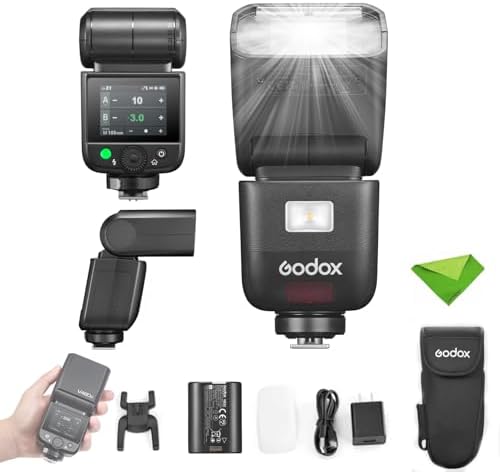
  • Widely Application: The Godox V480 S is comtaible with Sony Cameras. Such as, a77II, a99, a77, DSC-RX10, a6000, a7R, a35…
  • 650 Full-Power Flashes: A 7.2 V/2200 mAh rechargeable battery delivers up to 650 full-power flashes and recycles in just…
  • Intuitive Touchscreen & Buttons: The V480’s 2.0″ color touchscreen and tactile buttons work seamlessly together to deliv…
Bestseller #3
  • Supreme lightweight portability that makes telephoto shooting fun
  • Uncompromising image quality with 15 elements in 10 groups that lets you focus on creativity
  • Up-close shooting performance (31.5″ / 1:9.4 Wide & 59.1″ / 1:5.1 Tele)

Camera Lenses for Sony: A Buyer’s Guide to Choosing the Perfect Lens

You’ve got the Sony camera body—an incredible piece of technology ready to capture stunning images. But the body is only half the story. The real magic, the creative power, and the soul of your photograph comes from the glass you put in front of that sensor. Choosing the right camera lenses for Sony can feel like a monumental task, with a universe of focal lengths, apertures, and acronyms to decipher.

But don’t worry, it’s also the most exciting part of your photography journey.

This guide is here to turn that confusion into confidence. We’re going to break down everything you need to know about the amazing world of Sony lens options. Whether you’re a beginner looking for your first upgrade from the kit lens or a seasoned pro building out your dream toolkit, you’ll find clear, actionable advice to help you select the perfect lens to bring your creative vision to life. Let’s get started!

What You’ll Learn

  • Mount Compatibility is Key: You’ll understand the crucial difference between Sony’s E-mount and A-mount, as well as why matching Full-Frame (FE) or APS-C (E) lenses to your camera sensor is so important.
  • Prime vs. Zoom Lenses: We’ll demystify the debate between fixed prime lenses and versatile zoom lenses, helping you decide which type best fits your shooting style and creative goals.
  • Lenses for Every Occasion: Discover the main categories of lenses—wide-angle, standard, telephoto, and macro—and learn what kind of photography each one excels at.
  • Aperture and Focal Length Explained: You’ll finally grasp what those numbers like ’50mm’ and ‘f/1.8’ mean and how they directly impact the look and feel of your photos, from blurry backgrounds to epic landscapes.

First, What to Consider When Buying Lenses for Sony Cameras

Before you even think about adding a lens to your cart, there are a few fundamental concepts you absolutely need to understand. Getting these right ensures you buy a lens that not only works with your camera but also helps you achieve the specific look you’re after. Think of this as your pre-flight checklist!

E-Mount vs. A-Mount: The Great Divide

Sony has two main lens mount systems, and they are not interchangeable without an adapter. It’s vital to know which one your camera uses.

  • E-Mount: This is the modern standard for all of Sony’s mirrorless cameras, which includes the popular Alpha series (like the a7, a9, a6000 series, and ZV-E10). If you bought a Sony mirrorless camera in the last decade, you have an E-mount camera. The vast majority of new lenses being developed by Sony and third-party manufacturers are for this mount.
  • A-Mount: This was the mount for Sony’s older DSLR and SLT cameras (like the Alpha a99 or a77). While there are still great A-mount lenses available on the used market, it’s considered a legacy system with very little new development.

For this guide, we will be focusing exclusively on E-mount lenses, as they are the relevant choice for virtually all current Sony photographers.

Full-Frame (FE) vs. APS-C (E): A Critical Distinction

Within the E-mount system, there’s another layer of compatibility to understand, and it relates to your camera’s sensor size. Sony makes both full-frame cameras (like the a7 IV) and smaller APS-C cameras (like the a6600).

  • Full-Frame (FE) Lenses: These lenses are designed to project an image circle large enough to cover a full-frame sensor. You can identify them by the FE designation in their name (e.g., Sony FE 50mm f/1.8).
  • APS-C (E) Lenses: These are designed for the smaller APS-C sensor and are often lighter and more compact. They are simply designated with an E (e.g., Sony E 16-55mm f/2.8 G).

You can use an FE lens on an APS-C camera without any issues. However, if you use an APS-C ‘E’ lens on a full-frame camera, the camera will automatically switch to ‘APS-C mode,’ effectively cropping your image and reducing your megapixel count. It works, but it’s not ideal. The best practice is to match the lens to your sensor type.

Understanding Focal Length (The mm Number)

Focal length, measured in millimeters (mm), determines your field of view—how much of the scene your lens can capture. A lower number means a wider view, while a higher number means a more magnified, narrower view.

  • Wide-Angle (e.g., 16mm, 24mm): Captures a broad scene, perfect for landscapes, architecture, and astrophotography.
  • Standard (e.g., 35mm, 50mm): Closely mimics the human eye’s perspective, making it great for portraits, street photography, and general use.
  • Telephoto (e.g., 85mm, 135mm, 200mm+): Magnifies distant subjects, ideal for wildlife, sports, and portraits where you want to compress the background.

The Magic of Aperture (The f-Number)

Aperture refers to the opening in the lens that lets light into the camera sensor. It’s represented by an f-number, like f/1.8, f/4, or f/16. A lower f-number means a wider opening, which has two huge benefits.

  1. More Light: A wider aperture (like f/1.4 or f/1.8) lets in a ton of light, making it fantastic for shooting in dark conditions without cranking up your ISO.
  2. Shallow Depth of Field: This is how you get that beautiful, blurry background (called ‘bokeh’) that makes your subject pop. A wide aperture creates a very shallow plane of focus, isolating your subject from the background.

A higher f-number (like f/8 or f/11) means a smaller opening, letting in less light but keeping more of the scene in sharp focus, which is perfect for landscapes.

The Big Debate: Prime vs. Zoom Lenses for Sony Cameras

One of the first major decisions you’ll face when exploring Sony lens options is whether to get a prime lens or a zoom lens. There’s no right answer—it all depends on your needs, style, and priorities. Let’s break down the strengths of each.

The Case for Prime Lenses: Sharpness and Speed

A prime lens has a single, fixed focal length. A 50mm prime is always 50mm; you can’t zoom in or out. To change your framing, you have to physically move your feet. While this might sound limiting, it comes with some incredible advantages.

  • Superior Image Quality: Because they are engineered for just one focal length, prime lenses typically produce sharper, clearer images with less distortion than zoom lenses in the same price range.
  • Wider Apertures: Primes are famous for their “fast” or wide maximum apertures (like f/1.8, f/1.4, or even f/1.2). This makes them low-light champions and bokeh machines, perfect for creating that dreamy, professional-looking background blur.
  • Lighter and More Compact: With fewer moving parts and less complex glass elements, prime lenses are generally smaller and lighter than zooms, making your camera setup more portable and discreet.
  • Creative Growth: The “limitation” of a fixed focal length forces you to be more intentional with your composition. It encourages you to move around and think more creatively about how you frame your shot, which can be a powerful learning tool.

The Power of Zoom Lenses: Versatility and Convenience

A zoom lens covers a range of focal lengths, like a 24-70mm or a 70-200mm. With a simple twist of a ring, you can go from a wide shot to a tight close-up without taking a single step. This offers a completely different set of benefits.

  • Incredible Versatility: The ability to change your focal length on the fly is unbeatable in fast-paced situations. For events, travel, or wedding photography, a good zoom lens means you can capture a wide variety of shots without ever needing to swap lenses, potentially missing a critical moment.
  • Fewer Lenses to Carry: One high-quality zoom lens, like a 24-70mm, can effectively replace three or more prime lenses (e.g., a 24mm, 35mm, 50mm, and 70mm). This simplifies your camera bag and can be more cost-effective than buying multiple primes.
  • Compositional Flexibility: Zooms allow you to precisely dial in your framing without moving. This is especially useful when your movement is restricted, like at a concert, a sporting event, or on a narrow hiking trail.

Pro Tip: Many professional photographers carry both! They might use a versatile 24-70mm f/2.8 zoom for event coverage and then switch to a beautiful 85mm f/1.4 prime for dedicated portrait sessions where image quality and bokeh are the top priorities.

Which One is Right for You?

Consider your primary use case. If you’re a travel photographer who needs to adapt quickly to changing scenes, a zoom lens is your best friend. If you’re a portrait or street photographer who values maximum sharpness and beautiful background blur, a prime lens will be your go-to creative tool. Many photographers start with a zoom and add primes later as they discover which focal lengths they love most.

A Deep Look at Sony Lens Options: Types for Every Photographer

Beyond the prime vs. zoom debate, lenses are categorized by their focal length and specialized purpose. Understanding these categories will help you match the right tool to your photographic vision. Let’s explore the main types of lenses for Sony cameras.

Wide-Angle Lenses: Capturing Epic Landscapes

Focal Lengths: Typically anything wider than 35mm (e.g., 16mm, 20mm, 24mm).

Wide-angle lenses are all about capturing the grand scale of a scene. They have a vast field of view, allowing you to fit sweeping mountain ranges, towering cityscapes, or the entire night sky into a single frame. They can also be used creatively to exaggerate perspective, making foreground elements appear larger and more dramatic. This makes them an essential tool for landscape, architecture, real estate, and astrophotography.

Standard Lenses: The All-Rounders

Focal Lengths: Generally between 35mm and 70mm (with 50mm being the classic standard).

Often called “normal” lenses, this range provides a perspective that feels very natural and similar to what the human eye sees. This lack of distortion or magnification makes them incredibly versatile. A 50mm lens is a favorite for portraits, street photography, documentary work, and everyday shooting. If you could only have one prime lens, a 35mm or 50mm would be an excellent choice.

Telephoto Lenses: Bringing the Action to You

Focal Lengths: Anything longer than 70mm (e.g., 85mm, 135mm, 200mm, 400mm, 600mm).

Telephoto lenses act like binoculars for your camera. They excel at magnifying distant subjects, making them indispensable for wildlife photographers who can’t get close to their subjects and sports photographers capturing action from the sidelines. They are also fantastic for portraiture; short telephoto lenses (like 85mm or 135mm) create a flattering compression effect that separates the subject from the background beautifully.

Macro Lenses: Revealing the Tiny World

Focal Lengths: Often in the 50mm to 105mm range.

Macro lenses are specially designed for extreme close-up photography. They have a unique ability to focus very close to a subject, allowing them to reproduce it at a 1:1 life-size magnification on the camera sensor. This reveals intricate details invisible to the naked eye. They are perfect for shooting insects, flowers, jewelry, and any subject where tiny details matter.

A fun bonus is that most macro lenses also double as exceptionally sharp portrait lenses.

Best Sony Camera Lenses for Beginners

Stepping up from the basic kit lens is one of the most impactful upgrades you can make. You don’t need to spend a fortune to see a massive improvement in your photos. Here are a few fantastic and affordable Sony camera lenses that are perfect for beginners.

The “Nifty Fifty”: Why a 50mm f/1.8 is a Must-Have

Nearly every camera brand has an affordable 50mm f/1.8 lens, and for good reason. Sony’s FE 50mm f/1.8 is an absolute gem for those new to the system. It’s lightweight, incredibly affordable, and its wide f/1.8 aperture will instantly unlock your ability to shoot in low light and create that gorgeous background blur you see in professional photos. It’s a massive step up in image quality from a standard kit lens and will teach you so much about composition.

The Versatile Kit Lens Upgrade: A Better Standard Zoom

If the versatility of a zoom is more your style, but you want better image quality and low-light performance than the basic kit lens, consider a third-party zoom like the Tamron 28-75mm F/2.8 Di III VXD G2 or the Sigma 28-70mm F2.8 DG DN. These lenses maintain a constant f/2.8 aperture throughout their zoom range, giving you great performance in dim lighting and better subject separation. They are the perfect all-in-one lens for travel and everyday shooting.

A Budget-Friendly Telephoto Option

Want to start shooting wildlife or your kids’ sports games without breaking the bank? The Sony E 70-350mm F4.5-6.3 G OSS is a fantastic choice for APS-C camera owners, offering incredible reach in a compact package. For full-frame users, the Tamron 70-300mm F/4.5-6.3 Di III RXD is a lightweight and affordable option that gets you right into the action.

Essential Lenses for Sony Full-Frame Cameras (The “Holy Trinity”)

For professional photographers and serious enthusiasts, there’s a set of three zoom lenses often referred to as the “Holy Trinity.” This trio of f/2.8 zoom lenses covers a massive focal range from ultra-wide to telephoto, ensuring you’re prepared for almost any shooting scenario with top-tier image quality. Sony’s G Master (GM) series represents the pinnacle of their lens technology.

The Wide-Angle Zoom: Sony FE 16-35mm f/2.8 GM

This is the go-to lens for epic landscapes, dramatic architectural shots, and large group photos. It’s incredibly sharp from corner to corner and its f/2.8 aperture makes it a favorite for astrophotographers who need to capture as much light as possible from the night sky.

The Standard Zoom: Sony FE 24-70mm f/2.8 GM II

If you could only have one lens for professional work, this might be it. The 24-70mm focal range is the workhorse for wedding, event, and documentary photographers. It’s wide enough for scene-setting shots and long enough for beautiful portraits, all with the excellent low-light capability of an f/2.8 aperture. The second-generation version is remarkably sharp and lightweight.

The Telephoto Zoom: Sony FE 70-200mm f/2.8 GM OSS II

This lens is a legend in the worlds of portrait, sports, and event photography. The 70-200mm range is perfect for isolating subjects, compressing backgrounds for a flattering look, and capturing action from a distance. The constant f/2.8 aperture combined with optical image stabilization makes it a low-light powerhouse for capturing sharp images of moving subjects.

Together, these three lenses provide uncompromising quality and versatility from 16mm all the way to 200mm, which is why they form the core of so many professional photographers’ camera bags.

Finding Value: Budget-Friendly Lens Options for Sony Cameras

One of the best things about the Sony E-mount system is the incredible support from third-party lens manufacturers. Companies like Sigma, Tamron, Samyang (also known as Rokinon), and Viltrox produce some absolutely phenomenal lenses that often rival Sony’s own, but at a fraction of the price. Don’t ever feel like you have to buy a Sony-branded lens to get great results!

Why Third-Party Lenses are Amazing

In the past, third-party lenses sometimes had a reputation for slower autofocus or softer image quality. Those days are long gone. Today’s lenses from manufacturers like Sigma and Tamron are renowned for their optical excellence. Sigma’s ART series primes, for example, are considered some of the sharpest lenses ever made, period.

Tamron is famous for creating innovative zoom lenses that are compact, lightweight, and optically superb.

Exploring these brands is the single best way to build a high-quality lens collection without emptying your bank account. You can often get a lens with a fast f/2.8 or f/1.4 aperture for the price of a slower Sony equivalent.

Pro Tip: When shopping for budget lenses, look at reviews on YouTube. Channels like Christopher Frost, Dustin Abbott, and Gerald Undone provide incredibly detailed, real-world reviews of nearly every lens released for the Sony system, giving you a great idea of how they perform.

Beyond the Glass: Essential Accessories for Your Sony Lenses

Your investment doesn’t stop with the lens itself. A few key accessories can protect your gear, enhance your images, and make your shooting experience much smoother. These are not just nice-to-haves; they are essential parts of a photographer’s toolkit.

Lens Filters: UV, CPL, and ND Explained

Filters screw onto the front of your lens and can have a dramatic effect on your final image.

  • UV/Protective Filter: While they offer minimal UV protection for digital sensors, these are primarily used as an inexpensive layer of protection for the expensive front element of your lens. It’s much cheaper to replace a scratched filter than to repair a lens.
  • Circular Polarizer (CPL): This is a must-have for landscape photographers. A CPL filter reduces glare and reflections from surfaces like water and glass. It also enhances colors, making skies a deeper blue and foliage more vibrant.
  • Neutral Density (ND) Filter: An ND filter is like sunglasses for your lens. It reduces the amount of light entering the camera, allowing you to use slower shutter speeds in bright daylight. This is the secret to creating those silky, long-exposure shots of waterfalls and clouds.

Lens Hoods: More Than Just Shade

That plastic or metal piece that comes with your lens isn’t just for looks. A lens hood serves two critical functions. First, it blocks stray light from hitting the front of your lens, which prevents lens flare and improves contrast. Second, it acts as a bumper, providing an excellent first line of defense against accidental bumps and drops.

Cleaning Kits: Keeping Your Glass Pristine

Dust, fingerprints, and smudges on your lens will degrade your image quality. Every photographer needs a basic cleaning kit. This should include a rocket blower to remove loose dust, a soft microfiber cloth, and a lens pen or cleaning solution specifically designed for camera optics. Always blow off dust before wiping to avoid scratching the lens coating.

Frequently Asked Questions About Sony Camera Lenses

Navigating the world of lenses can bring up a lot of questions. Here are clear answers to some of the most common ones.

What are the best lenses for Sony?

There is no single “best” lens—the best one is the one that fits your specific needs and budget. For beginners, the Sony FE 50mm f/1.8 is a fantastic starting point. For general versatility, a 24-70mm f/2.8 from Sony, Sigma, or Tamron is an incredible all-around performer. For professionals, the Sony G Master “Holy Trinity” (16-35mm, 24-70mm, 70-200mm f/2.8) is widely considered the top-tier choice.

Do all Sony lenses fit all Sony cameras?

No, they do not. You must match the lens mount to your camera. Modern Sony mirrorless cameras use the E-mount, while older Sony DSLR/SLT cameras use the A-mount. Within the E-mount, you should also try to match the lens format (FE for full-frame, E for APS-C) to your camera’s sensor for optimal performance.

What is the Holy Trinity of Sony lenses?

The “Holy Trinity” refers to three professional-grade f/2.8 zoom lenses that cover a vast focal range. For Sony, this is typically the FE 16-35mm f/2.8 GM, the FE 24-70mm f/2.8 GM, and the FE 70-200mm f/2.8 GM. This set allows a photographer to handle almost any situation with exceptional image quality.

What is the difference between G and G Master lenses?

Both G and G Master (GM) lenses are part of Sony’s high-end lens lineup. G Lenses are high-quality, professional-grade lenses with excellent sharpness and build quality. G Master (GM) Lenses represent the absolute best of Sony’s optical technology. They are designed with the highest standards for resolution and bokeh, often featuring more exotic glass elements and more advanced construction to meet the demands of the highest-resolution cameras.

Should I buy a 35mm or 50mm lens?

This is a classic debate! A 50mm lens provides a very natural, “normal” perspective that is excellent for portraits and isolating subjects. A 35mm lens is slightly wider, making it better for environmental portraits (where you want to show some of the background), street photography, and general-purpose shooting where you might be in tighter spaces. If you can, try both to see which field of view you prefer.

Final Thoughts: Choosing Your Next Lens

Choosing a new lens for your Sony camera is an incredibly exciting step. It’s a creative decision that will directly shape the way you see and capture the world. Remember the key factors: understand your camera’s mount and sensor size, decide between the versatility of a zoom and the quality of a prime, and match the focal length to the subjects you love to shoot.

Don’t feel pressured to buy the most expensive G Master lens right away. The beauty of the Sony E-mount system lies in its vast range of fantastic Sony camera lenses and third-party options that deliver incredible value and stunning results at every price point.

Before you buy, consider renting a lens for a weekend. It’s a fantastic, low-cost way to know for sure if a focal length fits your style. Most importantly, pick a lens that gets you excited to go out and shoot. The best lens is the one that’s on your camera, helping you create images you love.

How to Choose Camera Lenses for Sony: A Buyer’s Guide for 2025

Bestseller #1
  • World’s first high-speed standard zoom lens for APS-C cameras with the focal length range of 17-70mm 4.1x zoom ratio
  • Outstanding optical performance with 16 elements in 12 groups featuring two GM (Glass Molded Aspherical) lens -elements …
  • Upgraded VC effective in combination with Sony APS-C mirrorless cameras, leveraging AI for video shooting
Bestseller #2
  • Widely Application: The Godox V480 S is comtaible with Sony Cameras. Such as, a77II, a99, a77, DSC-RX10, a6000, a7R, a35…
  • 650 Full-Power Flashes: A 7.2 V/2200 mAh rechargeable battery delivers up to 650 full-power flashes and recycles in just…
  • Intuitive Touchscreen & Buttons: The V480’s 2.0″ color touchscreen and tactile buttons work seamlessly together to deliv…
Bestseller #3
  • Supreme lightweight portability that makes telephoto shooting fun
  • Uncompromising image quality with 15 elements in 10 groups that lets you focus on creativity
  • Up-close shooting performance (31.5″ / 1:9.4 Wide & 59.1″ / 1:5.1 Tele)

How to Choose Camera Lenses for Sony: A Buyer’s Guide for 2025

Getting a new lens for your Sony camera is one of the most exciting upgrades you can make. It completely transforms your photos, opening up new creative possibilities that the standard kit lens just can’t touch. But with so many amazing camera lenses for Sony on the market, figuring out where to start can feel overwhelming. Are you a portrait shooter dreaming of creamy, blurred backgrounds.

A landscape adventurer who wants to capture epic, wide-open vistas. Or maybe you’re ready to dive into the tiny world of macro photography. No matter your passion, there’s a perfect lens waiting for you.

This guide is here to cut through the noise and get you excited about your next purchase. We’ll break down everything from the different types of lenses and what they do best to understanding compatibility and finding incredible value on any budget. Let’s find the piece of glass that will take your photography to the next level!

What to Know

  • Compatibility is Key: Sony has two main lens mounts: E-Mount for mirrorless cameras (the modern standard) and A-Mount for older DSLRs. Always check that the lens matches your camera’s mount.
  • Prime vs. Zoom: Prime lenses have a fixed focal length (like 50mm) and offer sharper images and wider apertures, perfect for low light and portraits. Zoom lenses offer versatility with a range of focal lengths (like 24-70mm), ideal for events and travel.
  • Aperture Matters: The f-number (e.g., f/1.8, f/4) controls how much light the lens lets in. A lower f-number means a wider aperture, which is better for low-light situations and creating that beautiful background blur (bokeh).
  • Full-Frame vs. APS-C: Lenses are designed for either full-frame or smaller APS-C sensors. You can use full-frame (FE) lenses on APS-C cameras, but using APS-C (E) lenses on a full-frame body will force it into a lower-resolution crop mode.
  • Don’t Forget Third Parties: Brands like Sigma, Tamron, and Samyang offer fantastic, high-quality Sony lens options, often at a more budget-friendly price point than Sony’s native G Master series.

Understanding Lens Compatibility: E-Mount vs. A-Mount for Sony

Before you even think about focal lengths or apertures, the first and most important question is: will this lens actually fit my camera? Sony has produced cameras with two different lens mount systems over the years, and getting this right is non-negotiable. It’s the foundation of building your camera kit.

E-Mount: The Modern Standard for Mirrorless
If you’ve bought a Sony mirrorless camera in the last decade—any model from the Alpha series like the a7, a9, a1, a6000 series, or ZV series—you have an E-Mount camera. This is Sony’s current, dominant system, and it’s where all the latest and greatest development is happening. The vast majority of new lenses for Sony cameras are designed for the E-Mount.

Within the E-Mount, you’ll see two designations: FE and E. FE lenses are designed to cover a full-frame sensor (like in the a7 IV), while E lenses are designed for the smaller APS-C sensor (like in the a6700). The good news. They are cross-compatible.

You can mount an FE lens on an APS-C camera without issue (it will just have a 1.5x crop factor, making a 50mm lens act like a 75mm). You can also mount an E lens on a full-frame camera, but your camera will automatically switch to “APS-C/Super 35mm Mode,” effectively cropping your sensor and reducing your megapixel count. For this reason, it’s best to match the lens to your sensor type whenever possible.

A-Mount: The Legacy DSLR System
Before mirrorless took over, Sony produced a line of DSLR and SLT cameras that used the A-Mount, a system inherited from Minolta. These were fantastic cameras, but Sony has officially discontinued development for the A-Mount. While you can still find these lenses on the used market, no new models are being released. If you have an older Sony Alpha DSLR like the a99 or a77, you have an A-Mount camera.

You can use these lenses on a modern E-Mount camera, but you will need an official Sony adapter, like the LA-EA5, to do so.

Prime vs. Zoom Lenses: What Works Best for Sony Users?

One of the biggest debates you’ll see in photography forums, from Reddit‘s r/SonyAlpha to Facebook groups, is the classic showdown: prime vs. zoom. There’s no single right answer; the best choice depends entirely on your shooting style, needs, and priorities. Let’s break down the strengths of each so you can decide which team you’re on!

The Case for Prime Lenses

A prime lens has a single, fixed focal length. Think of the classic “nifty fifty” 50mm lens, an 85mm portrait lens, or a 35mm street photography lens. You can’t zoom in or out; to change your composition, you have to physically move your feet. This might sound limiting, but it comes with some incredible advantages.

First, image quality is often superior. Because engineers only have to optimize the optics for one specific focal length, prime lenses tend to be sharper, with less distortion and chromatic aberration than a zoom lens covering the same range. Second, they are almost always “faster,” meaning they have a much wider maximum aperture (like f/1.8, f/1.4, or even f/1.2). This allows them to gather significantly more light, making them superstars in dark environments and allowing you to use faster shutter speeds.

That wide aperture is also the secret to achieving that dreamy, creamy background blur (bokeh) that makes portraits pop. Finally, primes are typically smaller, lighter, and less expensive than a high-quality zoom.

The Power of Zoom Lenses

A zoom lens offers a range of focal lengths in a single package, giving you incredible versatility. A standard zoom like a 24-70mm can cover wide-angle landscapes, mid-range portraits, and tighter shots without you ever needing to swap lenses. This is a massive advantage for event photographers, wedding shooters, travelers, or anyone who needs to react quickly to changing scenes.

Imagine you’re at a wedding. With a 70-200mm telephoto zoom, you can capture a wide shot of the venue, a medium shot of the couple exchanging vows, and a tight close-up of the rings, all in a matter of seconds from the same spot. That’s a feat that would be impossible with prime lenses. While high-end zoom lenses can be heavy and expensive, their convenience is unmatched.

Modern Sony camera lenses in the G Master lineup, like the FE 24-70mm f/2.8 GM II, have pushed the boundaries of optical quality, delivering sharpness that rivals many prime lenses.

Pro Tip: A popular strategy for many photographers is to start with a versatile “holy trinity” of zoom lenses (e.g., 16-35mm, 24-70mm, and 70-200mm) to cover all their bases, and then add specific prime lenses for specialized work like portraits or low-light street photography.

A Deep Dive into Types of Lenses for Sony Cameras

Beyond the prime vs. zoom debate, lenses are categorized by their focal length and intended purpose. Understanding these categories is the key to matching the gear to your creative vision. Each type of lens sees the world in a unique way, and building a versatile kit means having a few different perspectives at your disposal.

Standard Lenses (35mm to 70mm)

Standard lenses, often called “normal” lenses, have a field of view that roughly approximates what the human eye sees. This makes them incredibly versatile and a popular choice for everyday photography, documentary work, and street photography. The classic 50mm prime is the quintessential standard lens, loved for its natural perspective and typically wide aperture.

Wide-Angle Lenses (Below 35mm)

These lenses capture a much wider field of view than a standard lens, allowing you to fit more into the frame. They are the go-to choice for landscape, architecture, and real estate photography. Ultra-wide lenses (typically 12mm to 24mm) can create dramatic, immersive perspectives, but can also introduce distortion if not used carefully. They are perfect for making small spaces feel larger or for exaggerating the scale of a grand landscape.

Telephoto Lenses (Above 70mm)

Telephoto lenses bring distant subjects closer, making them essential for wildlife, sports, and concert photography. They compress the perspective, which can make backgrounds appear closer to the subject, creating a pleasing, flattened look that is also popular for portraiture. Lenses in the 70-200mm range are versatile workhorses, while super-telephotos (300mm and beyond) are specialized tools for serious wildlife and sports shooters.

Macro Lenses

Macro lenses are designed for extreme close-up photography, allowing you to capture tiny subjects at a 1:1 life-size magnification ratio. This means the image projected onto the camera’s sensor is the same size as the subject itself. They are perfect for shooting insects, flowers, jewelry, and any subject where intricate detail is paramount. Many macro lenses, like the Sony FE 90mm f/2.8 Macro G OSS, also double as outstandingly sharp portrait lenses.

Best Sony Camera Lenses for Breathtaking Landscapes

For landscape photographers, the goal is to capture the grandeur and scale of a scene, and that means going wide. A wide-angle lens allows you to create immersive images that pull the viewer into the environment, from sweeping mountain ranges to dramatic coastlines. The ideal focal length for landscape work typically falls between 12mm and 35mm on a full-frame camera.

When choosing a landscape lens, sharpness is paramount, especially edge-to-edge sharpness. You want every detail, from the foreground flowers to the distant mountains, to be crisp and clear. Look for lenses that perform well when stopped down to smaller apertures like f/8 or f/11, as this is the sweet spot for maximizing depth of field in landscape shots. Weather sealing is another crucial feature, giving you peace of mind when shooting in dusty, misty, or rainy conditions.

Top-tier options like the Sony FE 16-35mm f/2.8 GM are legendary for their sharpness and build quality. However, there are fantastic Sony lens options from third-party manufacturers as well. The Tamron 17-28mm f/2.8 Di III RXD is a popular, lightweight, and more affordable alternative that delivers excellent image quality. For those who want to go even wider, lenses like the Sony FE 12-24mm f/2.8 GM can create incredibly dramatic and dynamic compositions that truly stand out.

Capturing Stunning Portraits: Top Lenses for Sony Cameras

Portrait photography is all about the subject, and the right lens helps you isolate them from the background and render them in a flattering way. The key characteristics of a great portrait lens are a mid-telephoto focal length and a wide maximum aperture.

Focal lengths between 50mm and 135mm are considered the sweet spot for portraits. This range provides a natural perspective without the distortion that wider lenses can cause, and it offers pleasant compression that is flattering to facial features. The 85mm focal length is often hailed as the king of portrait lenses for its perfect balance of working distance and beautiful rendering.

A wide aperture (look for f/1.8 or f/1.4) is the other half of the magic formula. It allows you to shoot with a very shallow depth of field, which throws the background into a soft, creamy blur known as bokeh. This effect makes your subject pop from the frame and eliminates distracting background elements. The quality of the bokeh is a hallmark of premium portrait lenses, with more aperture blades and superior optical design creating smoother, rounder highlights.

Lenses like the Sony FE 85mm f/1.4 GM or the more budget-friendly Sony FE 85mm f/1.8 are phenomenal choices for any portrait photographer using the Sony system.

Getting Up Close: The World of Sony Macro Lenses

Ready to explore a world that’s invisible to the naked eye? Macro photography is an incredibly rewarding genre that turns everyday objects into fascinating subjects. From the intricate patterns on a fly’s eye to the delicate texture of a flower petal, a dedicated macro lens is your ticket to this miniature universe.

The defining feature of a true macro lens is its ability to achieve a 1:1 magnification ratio. This means it can reproduce a subject on the camera’s sensor at its actual life size. When choosing a macro lens, one important factor to consider is the focal length, as this determines your “working distance”—the space between the front of your lens and your subject.

A shorter focal length like 50mm requires you to get very close, which can be tricky with skittish subjects like insects that might be scared away by your presence. A longer focal length, such as the popular Sony FE 90mm f/2.8 Macro G OSS or the Sony FE 100mm f/2.8 STF GM OSS, gives you more working distance. This makes it easier to light your subject and less likely that you’ll disturb it. These lenses are also exceptionally sharp, making them fantastic dual-purpose options for stunningly detailed portrait work.

For the Action & Wildlife Shooters: Telephoto Lenses for Sony

When your subjects are far away and often moving fast, you need a lens with reach and speed. Telephoto lenses are the essential tool for wildlife and sports photographers, allowing you to fill the frame with subjects you can’t physically get close to. These lenses compress distance, bringing the action right to you.

The 70-200mm f/2.8 is often considered the most versatile telephoto zoom. It’s perfect for field sports, indoor events, and even portraits. Its constant f/2.8 aperture is crucial for maintaining fast shutter speeds to freeze action, even as you zoom. For subjects that are even farther away, like birds or big game, super-telephoto lenses in the 100-400mm, 200-600mm, or even longer prime ranges are necessary.

When shopping for lenses for Sony cameras in this category, two features are critical: autofocus speed and image stabilization. A fast, accurate, and tenacious autofocus system is needed to track erratically moving subjects. Sony’s native G Master telephotos are renowned for their AF performance. Optical SteadyShot (OSS), Sony’s term for in-lens image stabilization, is also a must-have.

It counteracts camera shake, which is greatly exaggerated at long focal lengths, helping you get sharp handheld shots.

Smart Buys: Finding Budget-Friendly Lenses for Your Sony Camera

Building a collection of high-quality glass doesn’t have to drain your bank account. While Sony’s top-of-the-line G Master lenses are phenomenal, there are many ways to get incredible performance for a fraction of the price. The ecosystem of Sony lens options is rich with value-packed choices.

One of the best strategies is to explore third-party manufacturers. Brands like Tamron and Sigma have become famous for producing lenses that compete directly with Sony’s best, often with unique features and at a much more accessible price point. The Tamron 28-75mm f/2.8 G2, for example, is a legendary alternative to the Sony 24-70mm GM, offering fantastic image quality in a lighter and more affordable package. Similarly, Sigma’s Art series of prime lenses is beloved by photographers for delivering world-class sharpness.

Another excellent option is to look at Sony’s own non-G Master lenses. Lenses like the FE 50mm f/1.8 or the FE 85mm f/1.8 offer about 90% of the performance of their G Master counterparts for less than half the cost. They are incredible values. Finally, don’t overlook the used market.

Reputable retailers like KEH or MPB offer professionally inspected used lenses with warranties, allowing you to get pro-level gear at a significant discount.

Key Factors in Choosing the Right Lens for Your Sony Mirrorless Camera

Okay, we’ve covered the types, the terms, and the options. Now, how do you put it all together to make the right choice for you? It comes down to honestly assessing your needs and priorities. Run through this checklist to find your perfect lens.

  1. What is Your Primary Subject? This is the most important question. Your subject dictates the focal length you need. Are you shooting…

    • Landscapes/Architecture? Look for a wide-angle zoom (e.g., 16-35mm).
    • Portraits? A prime lens in the 50mm to 135mm range is ideal (85mm is a classic).
    • Wildlife/Sports? You need a telephoto zoom (e.g., 70-200mm or 100-400mm).
    • Everyday/Travel? A versatile standard zoom (e.g., 24-70mm) or a small prime (e.g., 35mm) is perfect.
  2. What is Your Budget? Be realistic about what you can spend. You can get a fantastic prime lens for under $600, a great third-party zoom for around $900, or invest over $2,000 in a top-tier G Master lens. There’s a great option at every price point.

  3. How Important are Size and Weight? If you’re a hiker or a traveler, a massive, heavy lens will likely spend more time in your bag than on your camera. Consider smaller f/4 zoom lenses or compact prime lenses if portability is a major concern for you.

  4. Do You Shoot in Low Light? If you frequently shoot indoors, at dusk, or at night, a “fast” lens with a wide maximum aperture (f/2.8 or wider) will be a huge benefit. This allows you to keep your ISO low and your shutter speeds high, resulting in cleaner, sharper images.

By answering these four questions, you can narrow down the vast field of Sony camera lenses to a few top contenders that perfectly match your creative goals and practical needs.

Frequently Asked Questions

What is the sharpest Sony lens?

Sharpness can be subjective and depends on the specific use case, but generally, Sony’s G Master (GM) prime lenses are considered the pinnacle of optical performance. Lenses like the Sony FE 50mm f/1.2 GM, the FE 85mm f/1.4 GM, and the FE 135mm f/1.8 GM are renowned for their incredible, corner-to-corner sharpness even at their widest apertures. For zooms, the FE 24-70mm f/2.8 GM II and FE 70-200mm f/2.8 GM OSS II are exceptionally sharp and often rival prime lenses in their range.

Can I use Canon or Nikon lenses on a Sony camera?

Yes, you absolutely can. This is one of the major advantages of the Sony E-Mount system. Thanks to its short flange distance, you can adapt almost any lens to a Sony mirrorless camera with the right adapter. Companies like Sigma (with their MC-11 adapter for Canon EF lenses) and Fotodiox offer a wide range of adapters that allow you to mount Canon EF, Nikon F, and other lenses onto your Sony body.

While autofocus performance can vary depending on the lens and adapter combination, it’s a fantastic way to use legacy glass or access a wider variety of lens options.

What is the best all-around lens for a Sony camera?

For versatility, it’s hard to beat a high-quality standard zoom lens. The Sony FE 24-70mm f/2.8 GM II is often considered the best all-around professional lens due to its exceptional sharpness, fast autofocus, and useful focal range that covers everything from wide-angle to short telephoto. For a more budget-conscious but still excellent option, the Tamron 28-75mm f/2.8 Di III VXD G2 offers incredible value and performance. If you prioritize a smaller, lighter kit for travel, the Sony FE 24-105mm f/4 G OSS is another fantastic all-in-one solution.

Final Thoughts

Choosing a new lens is the start of a new creative chapter. It’s your tool for translating the world as you see it into a photograph. Whether you select a versatile zoom that’s ready for anything or a specialized prime that does one thing perfectly, the right piece of glass will inspire you to get out and shoot more. The ecosystem of camera lenses for Sony is bigger and better than ever, with incredible options for every style and budget.

Don’t get bogged down by specs alone. Think about what you love to photograph and how a new lens can help you capture it better. Read reviews, watch videos, and if you can, rent a lens for a weekend to see how it feels in your hands. The perfect lens is the one that makes you excited to pick up your camera.

Now go create something amazing.

Exit mobile version