From AI to AR: Cutting-Edge Gadgets Driving the Tech Revolution

The tech revolution is no longer a distant buzzword; it’s in your pocket, on your ears, and even tucked into the corners of your home. From subtle AI-driven enhancements to bold AR overlays, the latest gadgets make everyday life smarter and, frankly, a little more magical. Manufacturers blend hardware with intelligent software, producing devices that anticipate needs, learn preferences, and blur the line between physical and digital.

Cellphones and headphones have become the primary interfaces for this new world. Modern phones do more than connect calls and run apps: they act as portable studios, health monitors, AR windows, and AI companions. Computational photography stitches together dozens of exposures for perfect shots, while on-device neural engines power real-time translations and context-aware suggestions. Headphones, meanwhile, evolved beyond noise canceling. Spatial audio creates three-dimensional soundscapes that place you inside concerts and films. Adaptive transparency and AI-driven EQ tune audio to your environment and hearing profile. Some earbuds now host voice assistants locally, reducing latency and improving privacy.

Cameras and computers are converging into hybrid workhorses. Mirrorless cameras pack enormous sensors and machine learning into compact bodies, delivering pro-grade images with automatic focus tracking and subject recognition. Drones and action cams add stabilized video and obstacle-avoidance, letting creators capture perspectives that used to require a crew. On the computer side, tiny desktops and powerful laptops leverage custom silicon and dedicated AI accelerators. Creators edit 8K video, render 3D scenes, and run generative models on machines that are surprisingly portable. Cloud syncing, collaborative editing, and edge inference mean your workflow is seamless whether you’re in a studio or on a train.

Home security and appliances are quietly smartening up too. Video doorbells and smart locks combine high-resolution cameras, facial recognition, and instant alerts to keep intruders at bay and packages safe. But privacy matters; modern systems give homeowners control with encrypted feeds and local storage options. Inside, appliances use sensors and AI to optimize energy use and reduce waste. Refrigerators track inventory and suggest recipes. Washers choose the ideal cycle based on fabric and soil levels. Robotic vacuums map homes with LiDAR and avoid obstacles using machine vision. Environmental sensors monitor air quality and humidity, nudging HVAC systems for comfort and efficiency.

Together, these gadgets form an ecosystem that learns and adapts. Interoperability and standards are improving, but the future will demand thoughtful design: secure defaults, transparent AI behaviors, and seamless updates. Expect more devices to shift heavy lifting to on-device AI for speed and privacy, while AR will overlay helpful information on the world around you. The revolution isn’t about gadgets replacing humans; it’s about tools amplifying what we can do. And that’s a future worth getting excited about.

Expect startups and giants to push boundaries, experimenting with flexible displays, neural interfaces, battery breakthroughs extending uptime and shrinking charging times. Developers will craft AR experiences tied to real places, while designers prioritize accessibility and sustainability. As devices grow smarter, consumers will demand transparency, repairability, longevity—values that will define next chapter of the high-tech era.

The Latest Gadgets Revolutionizing Our Lives

Bestseller #1
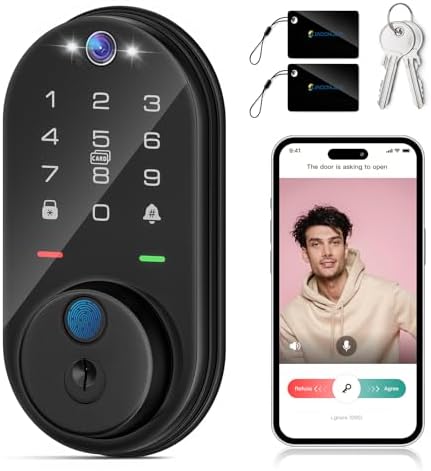
  • 【5-in-1 Keyless Entry for Apartments & Homes】 Combine a WiFi smart lock, 150° wide-angle camera, doorbell, fingerprint s…
  • 【4 Secure Unlock Methods with Anti-Peeping Feature】 Unlock effortlessly via AI fingerprint recognition, app remote contr…
  • 【Remote Access & 2-Way Audio for Daily Convenience】 Receive instant app alerts and live video feeds when the doorbell is…
Bestseller #2
  • 【Multiple Keyless Access】This fingerprint smart lock offers 6 convenient unlocking methods: App Remote Control, Fingerpr…
  • 【2-Way Audio with Enhanced Night Vision】When someone presses the doorbell, the Tuya app instantly pushes a real-time ale…
  • 【Built-in Wi-Fi for Remote Management】This digital door lock has built-in WiFi module, allowing full smartphone control….
Bestseller #3
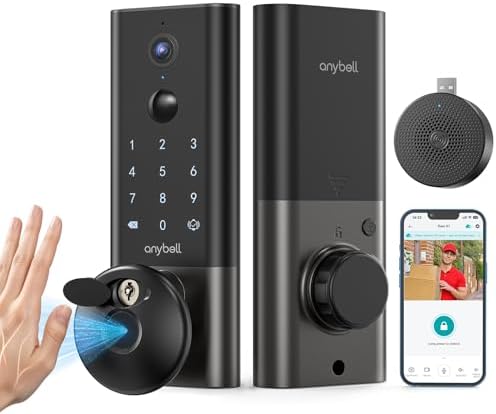
  • 【High Security with Palm Vein Unlocking】 Unlock doors in just 0.6 seconds with palm vein recognition technology, boastin…
  • 【2K Ultra-Wide Camera & Video Doorbell】Integrated into your smart door lock, the 110° 2K panoramic camera and video door…
  • 【Keyless Entry Freedom, Unlocking Flexibility】Experience keyless convenience designed for everyone. This keyless entry d…

Smart Gadgets, Small, and Surprising: Rewriting Everyday Life

Innovative Smart Gadgets Transforming Daily Life

Bestseller #1
  • The Best in Tech: Our formula for mTech is specifically designed to be safe on all your devices. Whether it’s your phone…
  • Home, Office, or On-The-Go: The mTech Cleaning Kit goes wherever you go, without the waste of individually wrapped clean…
  • Long-Lasting: The mTech Cleaning Kit holds enough cleaning formula to clean all of your tech, head to toe, dozens and do…
Bestseller #2
  • 【DUAL BAND WIFI 7 TRAVEL ROUTER】Products with US, UK, EU, AU Plug; Dual band network with wireless speed 688Mbps (2.4G)+…
  • 【NETWORK CONTROL WITH TOUCHSCREEN SIMPLICITY】Slate 7’s touchscreen interface lets you scan QR codes for quick Wi-Fi, mon…
  • 【OpenWrt 23.05 FIRMWARE】The Slate 7 (GL-BE3600) is a high-performance Wi-Fi 7 travel router, built with OpenWrt 23.05 (K…
Bestseller #3
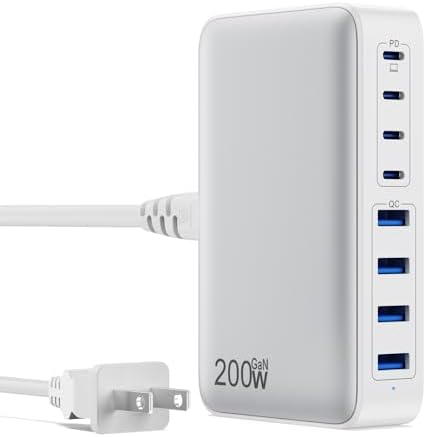
  • 【4 USB-C & 4 USB-A Ports Independently Charging 8 Devices at Once】We USB C Charger Block Unlike most chargers with false…
  • 【Latest GAN III Chip Technology Charger Station】The USB C charger adapted GaN III generation chip technology, built-in m…
  • 【Upgraded 65W boost Macbook Pro up to 55% in 30 Mins】With the inspiring 65W and 30W outputs, GKUTW’s USB-C charger block…

Pocket-sized smart gadgets computers and whisper-quiet earbuds have quietly reengineered the rhythm of our days. Cellphones are no longer just phones; they’re compact orchestras of sensors, processors, and cameras that anticipate needs before we type a word. Overnight battery optimizations, on-device AI, and lightning-fast 5G mean streaming, gaming, remote work, and health tracking happen seamlessly—often concurrently. Headphones have kept pace, transforming from simple audio accessories into personal soundscapes. Active noise cancellation chops away city noise; spatial audio surrounds your head with movie-theater depth. Smart earbuds can translate languages in near real time, monitor heart rate, and switch automatically between devices. In short, what we carry in our pockets now shapes how we communicate, commute, and even concentrate.

Cameras and computers have similarly converged and exploded with creativity. Mirrorless cameras capture cinematic depth with lightweight bodies, while smartphone cameras use computational techniques—stacked exposures, AI scene recognition, and depth mapping—to produce images that would have stunned pros a decade ago. Videographers and everyday storytellers alike enjoy stabilization that smooths out a bumpy bike ride, and optical zooms that pull faraway moments close without losing detail. On the computing side, thin laptops and desktop beasts coexist. Ultrabooks flex portability and battery life; desktop GPUs drive machine learning and photoreal rendering. Foldables and convertible designs blur the lines between tablet and laptop, catering to artists, students, and multitaskers. More importantly, edge AI inside both cameras and computers lets devices process sensitive data locally—faster responses, lower latency, and fewer privacy leaks.

At home, security and appliances have evolved from isolated utilities into a cohesive, responsive environment. Smart locks and doorbell cameras mean you can greet a delivery from across the globe, grant temporary access to a neighbor, or replay suspicious activity in crisp night vision. Home security systems now use behavioral analytics to reduce false alarms, while local processing helps preserve privacy. Appliances have shed dials for intelligence: refrigerators track expiration dates and suggest recipes; ovens preheat on commute; washers optimize cycles to save water and energy. Robot vacuums map rooms with surgical precision, and air purifiers adapt to pollen counts. Voice assistants act as choreographers, weaving routines that dim lights, brew coffee, and cue the morning news — all triggered by a single phrase.

Of course, this golden era of gadgets comes with trade-offs. Convenience invites dependency; connectivity introduces new vectors for attack. Interoperability remains uneven: not every device speaks the same language, and ecosystems can lock you in. Yet the overall trajectory is clear. Miniature processors, smarter sensors, and thoughtful software are turning mundane objects into collaborators—tools that free time, amplify creativity, and sharpen our senses.

We live in an age where the extraordinary fits in a pocket, rests on a wrist, or automates a chore. These high-tech gadgets don’t just add features; they reshape expectations and remake the ordinary into something quietly spectacular.

Wearables, Drones & Robots: The High-Tech Devices Redefining Convenience

High Tech Devices Transforming Everyday Life

Bestseller #1
  • MULTIPLE FUNCTIONS: Based on the newest upgraded chip compared to others, this drone has multiple interesting functions….
  • ELECTRIC ADJUSTABLE 1080P HD Camera: This Oddire drone equips an HD 1080P camera, which assists you in catching every wo…
  • STABLE HOVER & USER FRIENDLY: Equipped with an Optical Flow Positioning Camera, to make the drone have a more stable hov…
Bestseller #2
  • 【2K Ultra HD Camera】Loiley drone features a high-quality 2K HD camera with a 90° remote adjustable angle, allowing you t…
  • 【User-friendly & Optical Flow Positioning】 The Loiley drone operation is magically simple—press the one-touch start/land…
  • 【Take it with you】 Loiley drone with camera is your ultimate travel partner! It is small and lightweight, and the size i…

We live in an era where high tech devices with tiny circuits and clever code nudge chores into the background, leaving us more time to live. Wearables whisper health updates on our wrists, drones swoop packages across neighborhoods, and robots vacuum while we sip coffee—technologies that sound like science fiction but now fold into daily life. These high-tech gadgets aren’t just novelties; they continuously reshape convenience, blending hardware, software and human habits into seamless experiences.

Cellphones and headphones have evolved from communication tools into personal command centers. Modern phones pair biometric security, AI photography and always-on assistants to anticipate needs before you voice them. Headphones follow suit: active noise-canceling and spatial audio create private theaters for commuting, while health-tracking earbuds monitor heart rate and posture. Together these devices keep us connected and tuned-in without overwhelming attention, routing notifications intelligently and translating languages in real time when travel calls.

Cameras and computers form the creative and processing backbone of modern life. Pocket-sized cameras now sport enormous sensors and computational tricks that produce professional-looking photos in dim light. Drones add a bird’s-eye view, capturing angles once reserved for helicopters. On the processing side, laptops and desktops grow thinner and faster, harnessing specialized chips for video editing, machine learning and gaming. Edge computing pushes power closer to devices, enabling real-time analysis on cameras and drones—so your footage can be stabilized, tagged and uploaded automatically while you’re still in the field.

Home security and appliances are getting a tech makeover that prioritizes safety, efficiency and ease. Smart locks recognize fingerprints and remote commands; cameras use AI to distinguish a delivery from a stranger, and doorbells let you speak with visitors from anywhere. In the kitchen, intelligent ovens learn your recipes, adjusting times and temperatures for perfect results. Robotic appliances—vacuums, mops, lawnmowers—quietly handle repetitive tasks, reporting status to phone apps and integrating with voice assistants. Energy management systems coordinate thermostats, lighting and solar panels to reduce waste and lower bills, often autonomously.

What ties these innovations together is connectivity: networks that let wearables, drones and robots exchange context and act without constant human intervention. Privacy and security remain front and center as manufacturers chase convenience; responsible design and clear user control are essential. Still, the practical upside is substantial: less friction, smarter decisions and more moments reclaimed from daily grind.

Expect the pace to accelerate. New sensors, longer-lasting batteries and smarter algorithms will deepen integration—devices that understand not only your commands, but the rhythms of your life. The future of convenience looks collaborative: humans and machines working side by side, each doing what they do best. Practical, not magical; but when the groceries arrive by drone and the floor is already clean, it sure feels a lot like magic.

As sensors shrink and software learns, expect surprising hybrids: wearable cameras that pilot drones, home robots that double as security sentries, and phones that troubleshoot appliances. Convenience won’t replace craftsmanship or thought, but it will free tiny slivers of time—hundreds of tiny privileges adding up to a noticeably easier life.

Beyond Smartphones: Cutting-Edge Gadgets Shaping the Next Decade

Exploring the Latest Cutting Edge Gadgets

Bestseller #1
  • CUT FOOD QUICKLY! – KEISSCO ulu knife / pizza cutter is a really versatile kitchen tool, great for cutting all sorts of …
  • COOL DESIGN! BETTER THAN OTHERS – With top-quality materials, UPGRADED anti-slip handle and holder,strong blade,supper s…
  • EASY TO USE! COMFORT – The fact that you are comfortable while using this product is very important, and it starts with …
Bestseller #2
  • [Latest Version]Upgraded 4.75 inch with 12 blades oversized apple slicer. With an inner diameter of 4.1 inches, each bla…
  • 【Easy to use】Choose apples no larger than 4 inches, align the slicer with the center of the core, push the slicer down h…
  • 【Perfect Gadgetry 】You can use an apple slicer to prepare healthy apple snacks for your children, or you can easily make…
Bestseller #3
  • Durable TPU Cutting Board – Large Size Measuring 15.4″ x 10.3″ with a thickness of 0.14 inches, this premium TPU cutting…
  • BPA Free TPU Material Crafted from BPA free TPU (Thermoplastic Polyurethane), this flexible cutting board is safe for ev…
  • Versatile Kitchen Use Ideal for slicing fruits, vegetables, bread, cheese, fish, and meat, the large surface offers plen…

Imagine a decade where “smart” is not just a label but an invisible layer that anticipates needs cutting edge gadgets, reduces friction, and quietly improves daily life. We’re already living through the first tremors of that change. Beyond the familiar glow of smartphones, a constellation of high-tech devices—phones reinvented, headphones that act like personal soundscapes, cameras that think for you, computers that learn, and homes that respond—are shaping what comes next.

Cellphones have stopped being single-purpose rectangles. Foldables add new form factors: one moment a compact wallet-friendly device, the next a tablet-sized canvas for multitasking. Under the hood, dedicated neural chips bring real-time AI to the palm of your hand—on-device translation, instant photo enhancement, and context-aware assistants that respect latency and privacy because they work offline.

Satellite connectivity and mesh networking are turning phones into lifelines in remote areas and emergencies, while modular accessories let consumers swap batteries, camera modules, or specialty sensors without replacing the whole device.

Headphones are no longer just speakers for music. Active noise cancellation has matured into personalized soundscapes that adapt to your ears, environment, and even heart rate. Spatial audio creates theater-like immersion for podcasts and virtual concerts.

Some models now include health sensors—pulse, oxygen levels, even posture cues—making earbuds useful health companions. Bone-conduction options and open-ear designs keep you aware of your surroundings, balancing safety with immersion.

Cameras are shifting from mechanical to computational masterpieces. Sensor tech continues to shrink while dynamic range explodes. Computational photography stitches frames, removes noise, and reconstructs detail that older optics could never capture.

Drones and pocket gimbals democratize cinematic shots, while professional systems embrace AI autofocus that predicts action and reallocates processing to where it matters most. Meanwhile, plug-and-play modular sensors let creators experiment—thermal, macro, or depth—without buying a whole new rig.

Computers, too, are undergoing an identity shift. ARM-based laptops deliver blistering battery life while keeping fan noise low. Specialized neural accelerators make local inference fast and efficient, enabling applications like offline video editing with AI assistance, instant code generation, and privacy-friendly data analysis. Expect hybrid architectures: lightweight edge devices paired with cloud bursts for heavy lifting. Foldable and rollable displays hint at laptops that reshape themselves for work, art, and play.

The connected home is becoming a responsive ecosystem rather than a collection of remote-controlled appliances. Advanced home security meshes smart locks, cameras, and sensors into systems that use on-device person recognition and anomaly detection to reduce false alarms.

Battery-backed, self-healing networks maintain connectivity during outages. Appliances learn: refrigerators monitor spoilage and suggest meals, ovens auto-calibrate to recipes, and washers choose cycles based on fabric sensors. Predictive maintenance flags failing components before they break, saving money and annoyance. Robot vacuums, air purifiers, and irrigation systems coordinate with energy pricing to run when green electricity is cheapest.

There’s no shortage of excitement—and reasonable concern. Interoperability, data governance, and ethical AI will determine whether these innovations empower or entangle us. If designers center human needs—privacy, accessibility, and simplicity—the next decade could deliver gadgets that feel less like gizmos and more like thoughtful extensions of our daily lives.

Exit mobile version