




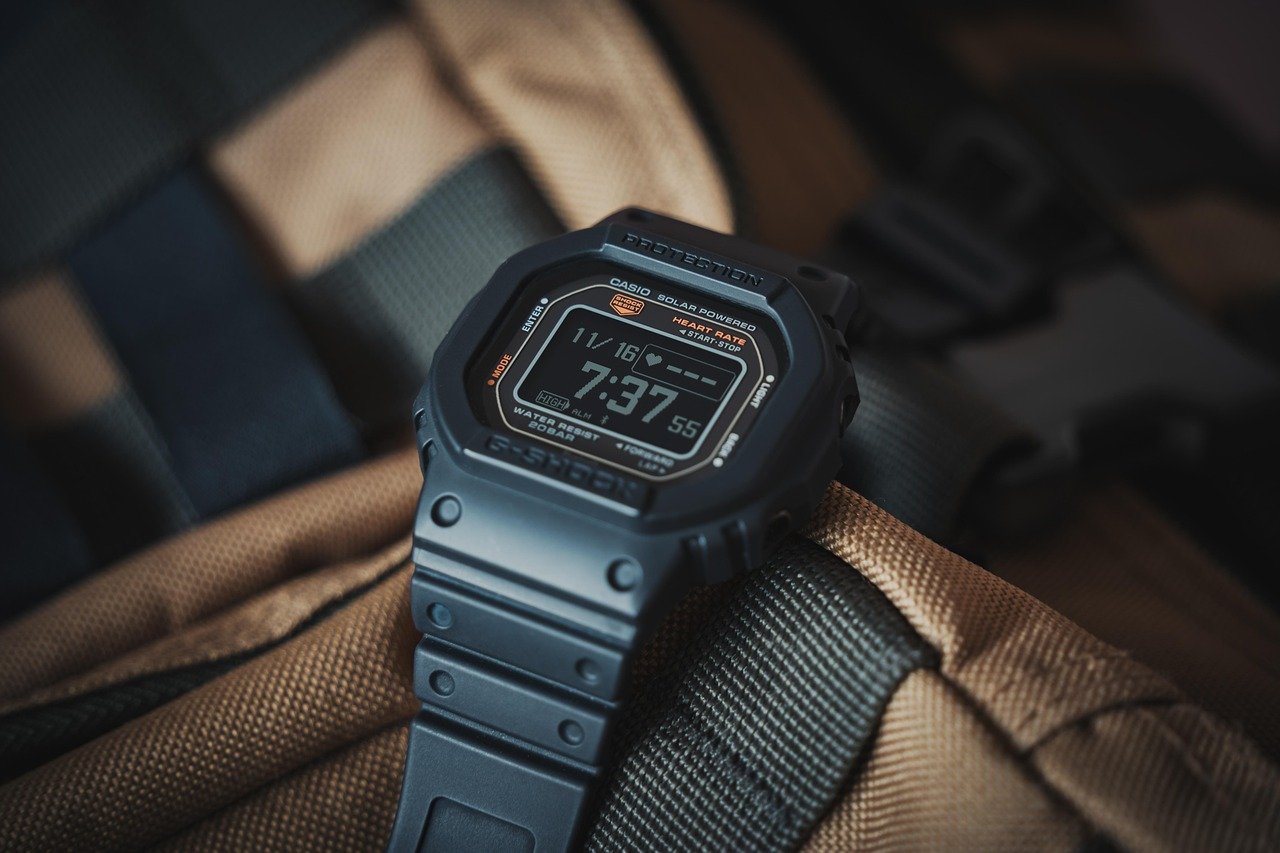
Garmin Watches for Fitness Tracking: How to Choose the Perfect Model
Choosing the right device in the world of garmin watches for fitness tracking can feel like navigating a maze. With dozens of models, from the sleek Venu to the rugged Fenix, each packed with a dizzying array of features, it's easy to feel overwhelmed. You know you want best-in-class data to level up your training, but which watch has the exact tools you need without the features you don't? You're not just buying a watch; you're investing in a training partner that will live on your wrist 24/7.
This guide is here to cut through the noise. We're going to break down everything you need to know, from the core features that set Garmin apart to a direct comparison of models designed for different types of athletes. By the end, you'll have a clear, confident understanding of which Garmin is the perfect fit for your fitness journey, whether you're a weekend warrior, a dedicated marathoner, or an outdoor adventurer. Let's find your perfect match!
In a Nutshell
- Data is King: Garmin's biggest strength is the depth and accuracy of its fitness and health metrics, including Body Battery, Training Status, and advanced sleep tracking, which go far beyond simple step counting.
- A Model for Everyone: Garmin doesn't believe in a one-size-fits-all approach. The Venu series is great for all-around fitness and lifestyle, Forerunners are built for runners, and the Fenix/Epix lines are for serious multi-sport and outdoor athletes.
- The Ecosystem Matters: The Garmin Connect app is a powerful, free tool that turns your watch's data into actionable insights, trends, and community challenges, making it a central hub for your health journey.
- Unmatched GPS and Battery: Garmin is renowned for its highly accurate GPS tracking (especially with Multi-Band GNSS on newer models) and incredible battery life, often lasting days or even weeks on a single charge.
Why Choose Garmin Watches for Fitness Tracking?

When you start looking for a serious fitness tracker, the name Garmin inevitably comes up, and for good reason. Unlike some competitors that build smartwatches with added fitness features, Garmin builds dedicated garmin sports watches from the ground up. This sport-first philosophy is evident in every aspect of their design, from the durable materials to the button-based controls that work flawlessly with sweaty hands or gloves.
This focus means you get data that is not only comprehensive but also incredibly actionable. Garmin doesn't just tell you how far you ran; it analyzes your performance, recovery, and daily stress to give you a holistic picture of your body's readiness to train. Features like Training Status and Body Battery provide insights that help you decide whether to push hard for a new personal best or take a much-needed recovery day, preventing overtraining and injury.
Furthermore, Garmin has cultivated a reputation for reliability and longevity. Their watches are built to withstand the elements, and their battery life is legendary. While many smartwatches need to be charged daily, it's common for a Garmin watch to last a week, two weeks, or even longer, ensuring it's always ready for your next workout or adventure without causing battery anxiety.
The Core Features That Make Garmin a Fitness Powerhouse
What truly sets garmin fitness trackers apart is the suite of proprietary features that transform raw data into a personalized coaching experience. These aren't just vanity metrics; they are powerful tools designed to help you understand your body on a deeper level. Let's explore some of the most impactful ones.
Body Battery™ Energy Monitoring
Imagine having a fuel gauge for your body. That's exactly what Body Battery does. It uses data from heart rate variability (HRV), stress, and sleep quality to estimate your energy reserves on a scale of 1 to 100. Waking up with a high number means you're charged up and ready to tackle a tough workout.
Seeing it drain throughout the day helps you understand the impact of stress and activity, while a low starting number is a clear sign you need more rest.
Training Status & Load
This feature is a game-changer for anyone serious about making progress. It analyzes your recent training load and VO2 max trends to tell you if your training is productive, peaking, maintaining, or unproductive. If you're constantly pushing hard without enough recovery, it will flag you as "Overreaching," helping you pull back before you burn out. It's like having a coach analyze your workout log and give you direct feedback.
Advanced Sleep Tracking & Sleep Score
Garmin provides a detailed breakdown of your sleep stages (light, deep, REM) and gives you a nightly Sleep Score from 1-100. More importantly, it provides context. You'll get insights on why your sleep was restorative or restless, with tips on how to improve. This is crucial because quality sleep is the foundation of recovery and fitness gains.
VO2 Max Estimation
VO2 max is a key indicator of cardiovascular fitness—it measures the maximum amount of oxygen your body can use during intense exercise. Garmin estimates this for running and cycling, giving you a clear benchmark of your fitness level. Tracking its trend over time is one of the best ways to see if your training is actually making you fitter.
Finding Your Perfect Match: Garmin Models for Every Fitness Level
Garmin's extensive lineup can be confusing, but it's best understood by breaking it down by user type. Finding the right series is the first and most important step in choosing your ideal watch. Here's a look at the main categories and who they're for.

For the Everyday Fitness Enthusiast: The Venu Series
The Venu line (including the Venu 3) is Garmin's answer to the Apple Watch. It boasts a stunning AMOLED display, making it a beautiful lifestyle watch that's packed with serious fitness capabilities. It's perfect for people who do a bit of everything: gym workouts, yoga, casual runs, and swimming, and want all-day health monitoring.
- Who it's for: The gym-goer, the wellness-focused individual, or anyone who wants a powerful fitness tracker that doesn't scream "I'm an athlete."
- Key Strengths: Bright AMOLED screen, on-screen animated workouts, music storage, and a full suite of health monitoring tools.
- Considerations: Lacks some of the advanced training metrics found in the Forerunner and Fenix series.
For the Dedicated Runner & Triathlete: The Forerunner Series
As the name suggests, the Forerunner series is built for runners. From the entry-level models to the elite 900-series, these watches provide detailed running dynamics, training plans, and race-day features. Models like the Forerunner 265 and 965 now feature brilliant AMOLED displays while retaining the hardcore training metrics that runners love.
- Who it's for: Anyone from a new 5k runner to a seasoned marathoner or triathlete.
- Key Strengths: Advanced running metrics (e.g., cadence, ground contact time), Training Readiness score, daily suggested workouts, and multi-sport profiles on higher-end models.
- Considerations: The design is more sporty and less versatile for formal occasions compared to the Venu.
For the Outdoor Adventurer & Multi-Sport Pro: The Fenix & Epix Series
These are the top-tier, do-it-all watches. The Fenix (with a memory-in-pixel display for epic battery life) and Epix (with a gorgeous AMOLED display) are built with premium materials like titanium and sapphire glass. They have every fitness feature Garmin offers, plus advanced mapping, navigation, and specialized activity profiles for things like hiking, climbing, and backcountry skiing.
- Who it's for: The serious triathlete, ultrarunner, hiker, or anyone who wants the most durable watch with the most features and data.
- Key Strengths: Unbeatable durability, preloaded topographic maps, incredible battery life (especially Fenix), and the most comprehensive set of activity profiles.
- Considerations: They are the largest, heaviest, and most expensive models in the lineup.
| Feature | Garmin Venu 3 | Garmin Forerunner 265 | Garmin Fenix 7 Pro |
|---|---|---|---|
| Primary User | All-Around Fitness | Dedicated Runners | Outdoor/Multi-Sport |
| Display Type | AMOLED | AMOLED | MIP (Sunlight-Visible) |
| Battery Life | Up to 14 days | Up to 13 days | Up to 22 days (w/ solar) |
| Advanced Maps | No | No | Yes (Topographic) |
| Training Readiness | No | Yes | Yes |
| Best For | Gym, wellness, style | Running, triathlons | Hiking, ultra-running |
Beyond the Steps: The Real Benefits of Tracking with Workouts
Using fitness tracking garmin watches is about more than just logging miles or counting reps. The true benefit lies in how the data empowers you to make smarter decisions about your health and training. It's about transforming your approach from reactive to proactive.
One of the biggest advantages is injury prevention. By monitoring your training load, recovery status, and even your running form, the watch can alert you when you're pushing too hard or developing imbalances. This early warning system allows you to adjust your training before a minor ache becomes a sidelining injury. It encourages a more balanced approach to fitness, emphasizing recovery as much as effort.
Another key benefit is motivation through data. Seeing your VO2 max tick upward or your resting heart rate trend downward provides concrete proof that your hard work is paying off. This objective feedback is incredibly motivating, especially on days when you don't feel like training. The Garmin Connect app's challenges and badges add a fun, gamified layer that keeps you engaged and striving for new goals.
The Heart of the Matter: Garmin's Advanced Heart Rate Tech
Accurate heart rate monitoring is the cornerstone of modern fitness tracking, and Garmin has invested heavily in its wrist-based sensor technology. Most current models use the Garmin Elevate™ optical heart rate sensor, which uses light to measure the subtle changes in blood volume under your skin as your heart beats.
Over the years, this technology has become remarkably accurate for steady-state activities like running and cycling. The latest Gen 4 and Gen 5 sensors have improved algorithms and hardware that reduce interference from arm motion, providing data that closely rivals a traditional chest strap for most workouts. This allows you to train in specific heart rate zones, track your recovery via resting heart rate, and get 24/7 stress monitoring.
However, it's important to understand the limitations. For activities with rapid heart rate changes, like high-intensity interval training (HIIT) or strength training, a chest strap will always provide the gold standard of accuracy. The good news is that all Garmin watches can easily pair with an external heart rate monitor (like the HRM-Pro Plus) for those workouts where you need absolute precision.
Never Get Lost Again: GPS Accuracy and Mapping Explained

Garmin built its brand on GPS technology, and that expertise is a core strength of its sports watches. Accurate distance and pace tracking is non-negotiable for any serious athlete, and Garmin consistently delivers. This is where they truly shine compared to many lifestyle-focused smartwatches.
Newer, mid-to-high-end models feature Multi-Band GNSS (Global Navigation Satellite System). This technology allows the watch to access multiple satellite frequencies simultaneously (L1 and L5), which dramatically improves accuracy in challenging environments. If you've ever run in a city with tall buildings or on a trail with dense tree cover and seen your GPS track go haywire, Multi-Band is the solution. It filters out bad signals, giving you a much cleaner and more accurate track of your route and pace.
For adventurers, the mapping capabilities on the Fenix, Epix, and high-end Forerunner models are a massive advantage. These watches come with preloaded, full-color topographic maps that you can view right on your wrist. You can create courses in the Garmin Connect app and send them to your watch for turn-by-turn navigation, ensuring you never get lost on a new trail or in an unfamiliar city.
Pro Tip: To get the best GPS performance, always wait for the watch to get a solid satellite lock (the GPS indicator turns green) before you start your activity. This usually only takes a few seconds and ensures the most accurate tracking from the very beginning of your workout.
Your Fitness Hub: The Power of the Garmin Connect App
The watch on your wrist is only half of the equation. The Garmin Connect app (available on iOS and Android) is the powerful, free command center where all your data comes to life. After you sync your watch, the app presents your health and fitness stats in a clean, customizable dashboard.
This is where you can dive deep into your data. You can analyze workout performance, track long-term trends in your sleep or stress levels, and see how your training is impacting your overall fitness. The app's reporting is incredibly detailed, allowing you to overlay charts and compare metrics to find correlations between your training, recovery, and performance.
Beyond data analysis, Garmin Connect is also a social platform. You can connect with friends to share activities, compete in weekly step or running challenges, and join groups to find motivation. The app also houses a workout builder and free adaptive training plans for running and cycling, coached by real experts, which you can sync directly to your watch.
Master Your Sport: Tracking Running, Cycling, and Swimming
While Garmin watches are excellent all-rounders, they offer incredibly deep feature sets for specific sports, particularly the big three: running, cycling, and swimming.
For runners, it's all about the data. Paired with a Running Dynamics Pod or compatible heart rate strap, you can get advanced metrics like vertical oscillation, ground contact time, and running power. This information helps you analyze and improve your running form to become more efficient and less injury-prone.
Cyclists can pair their watch with power meters, smart trainers, and Varia radar lights. The watch can act as a full-featured bike computer on your wrist, displaying all your key data. While many serious cyclists may still prefer a dedicated head unit, like those from Wahoo Fitness, a high-end Garmin watch provides more than enough data for most riders and is perfect for brick workouts in triathlon training.
For swimmers, Garmin watches excel at tracking both pool and open-water swims. In the pool, the watch will automatically detect your stroke type and track lengths, distance, pace, and SWOLF (a measure of swimming efficiency). In open water, it uses GPS to track your path and distance, providing a map of your swim afterward.
What Real Users Are Saying
Lab tests and feature lists are one thing, but real-world experience tells the full story. Across platforms like Reddit and in reviews from publications like Wired and Runner's World, a few common themes emerge. Users consistently praise Garmin for its battery life and the sheer depth of its data. A common sentiment on the r/Garmin subreddit is that once you get used to the rich data ecosystem, it's hard to go back to a simpler tracker.
An insightful post from fitness influencer juliexfit on Instagram perfectly frames the key difference in the market:
“Apple Watch is a smartwatch with fitness features. Garmin Venu 3S is a fitness watch with smart features. Oura Ring is wellness and recovery focused.”
This highlights Garmin's core identity. Users choose Garmin when their primary priority is tracking workouts and performance. While it has smart features like notifications and mobile payments, its soul is in sport. This is a sentiment echoed in many discussions comparing Garmin to the Apple Watch; if you're a data-driven athlete, Garmin is almost always the recommended choice.
The Future on Your Wrist: What's Next for Garmin?
Garmin is constantly innovating, and the future of fitness tracking is incredibly exciting. While the company doesn't pre-announce features, we can look at industry trends and recent acquisitions to see where things might be headed. One major area of development is health monitoring beyond basic fitness.
We're already seeing features like ECG (electrocardiogram) on some models, and it's likely this will expand across the lineup. The industry is racing towards non-invasive monitoring of metrics like blood pressure and even blood glucose levels. While this technology is still in its early stages, Garmin is undoubtedly researching and developing in this area. Imagine your watch being able to alert you to hydration needs or fuel depletion in real-time based on your body's chemistry.
Another exciting frontier is the integration of AI. We're already seeing the beginnings of this with daily suggested workouts that adapt to your performance and recovery. In the future, this could evolve into a truly dynamic AI coach on your wrist. It could analyze your running form in real-time and provide audio cues to correct it, or adjust your marathon training plan on the fly if you have a poor night's sleep.
The watch will become less of a data logger and more of an interactive training partner.
Frequently Asked Questions About Garmin Fitness Trackers
Which Garmin watch is best for fitness tracking?
The "best" Garmin really depends on your primary activities and budget. For general fitness, gym workouts, and all-day health tracking with a great screen, the Garmin Venu 3 is a top choice. For dedicated runners and triathletes, the Forerunner series (like the 265 or 965) offers the best balance of features and price. For serious outdoor adventurers who need maximum durability and mapping, the Fenix 7 Pro or Epix Pro are the ultimate options.
Is a Garmin better than a Fitbit?
For casual users focused on steps, sleep, and general wellness, Fitbit offers a simple, user-friendly experience. However, for anyone serious about athletic performance and data, Garmin is significantly more powerful. Garmin provides more advanced metrics (VO2 Max, Training Status), superior GPS accuracy, and a much deeper feature set for specific sports like running, cycling, and swimming. Plus, all of Garmin's data is available for free in the Connect app, whereas Fitbit puts some of its advanced insights behind a premium subscription.
Is it worth getting a Garmin over an Apple Watch?
This comes down to your primary use case. The Apple Watch is an exceptional smartwatch with strong fitness features, deep integration with the Apple ecosystem, and a superior app store. If you want a seamless extension of your iPhone that also tracks workouts well, it's a great choice. A Garmin is a dedicated sports watch with some smart features.
If your priority is long battery life, in-depth training data, and physical buttons for workouts, a Garmin is the better tool for the job.
How do I choose the right Garmin for me?
Start by identifying your main activities and your budget. Ask yourself what features are non-negotiable. Do you need on-screen mapping. Do you want music storage.
Is an AMOLED screen a must-have. Use Garmin's website to compare the key series (Venu, Forerunner, Fenix/Epix) and then drill down into the specific models within that series to find the one that matches your feature list and price point.
Why is my Garmin watch battery dying so quickly?
Several features can significantly impact battery life. The biggest drains are typically the GPS (especially Multi-Band mode), a high-brightness screen setting (on AMOLED models), and the Pulse Oximeter (SpO2) sensor. If you have Pulse Ox set to track all day or during sleep, it will reduce battery life considerably. To extend it, you can change GPS settings to a more efficient mode, lower screen brightness, and set Pulse Ox to manual spot-checks only.
Final Thoughts: Is a Garmin Watch Right for You?
After exploring the deep feature sets, the robust hardware, and the powerful ecosystem, it's clear that Garmin watches for fitness tracking are a top-tier choice for anyone who takes their activity seriously. They offer a level of detail and actionable insight that few competitors can match, all wrapped in a durable package with phenomenal battery life. The commitment to sport is evident in every feature, from the sweat-proof buttons to the advanced training metrics that help you perform at your best.
The key is to choose the right tool for your personal goals. If you're a data-driven athlete who wants to understand the 'why' behind your performance, improve your training, and prevent injury, then a Garmin is an incredible investment. By matching your primary activities to the right series—Venu for all-around wellness, Forerunner for running, and Fenix for adventure—you can find a training partner that will not only track your journey but actively help you reach your next peak.


