



About Best High Tech Gadgets For Adults: Best High Tech Gadgets For Adults is your trusted source for cutting-edge technology insights and solutions. High Tech Gadget Reviews We provide reliable, well-researched technology content to keep you informed and help you make better decisions. This content focuses on Which smart scale is closest to DEXA and related topics.

You are not alone if you are wondering which bathroom device gets closest to the precision of DEXA [dual-energy X-ray absorptiometry]. In this guide, we translate lab jargon into clear, practical takeaways and outline features and guidance that put real-world accuracy first. Rather than pitting one brand against another, we explain the science, outline features that truly matter, and show you how to set up your routine for consistent, decision-ready data. By the end, you will know how to choose a scale that aligns with your training goals, home setup, and privacy preferences while staying grounded in evidence.
What DEXA [dual-energy X-ray absorptiometry] measures and why it matters
DEXA [dual-energy X-ray absorptiometry] is widely considered a reference method for body composition because it directly quantifies total and regional fat mass, lean mass, and bone mineral content using low-dose X-rays. In practical terms, DEXA shows where tissue sits on your body and how much of each type you carry, which is why athletes, clinicians, and researchers view it as a gold-standard benchmark. While you likely will not scan weekly, the clarity from a DEXA snapshot helps calibrate your expectations for what an at-home scale can and cannot replicate. Think of DEXA as the orchestra conductor and a smart scale as a well-trained section: when they are in tune, your day-to-day trends and periodic scans harmonize.
However, closeness to DEXA is not a single number. Agreement depends on many factors, including your hydration status, recent exercise, menstrual cycle phase, and even room temperature. Industry data suggests that consumer bioelectrical systems often show a group-level correlation with DEXA, yet individual readings can differ by several percentage points. That does not make them useless. It means the smartest path is to choose a scale designed to minimize known error sources and to use a consistent protocol so your trends align more tightly with your reality.
| Method | How It Works | Primary Outputs | Strengths | Limitations | Typical Use |
|---|---|---|---|---|---|
| DEXA [dual-energy X-ray absorptiometry] | Low-dose X-rays differentiate bone, fat, and lean tissue region by region | Fat mass, lean mass, bone mineral content, regional distribution | High repeatability, regional detail, clinical reference | Requires appointment, cost, radiation exposure is minimal but nonzero | Quarterly or semiannual benchmarking |
| BIA [bioelectrical impedance analysis] smart scales | Weak electrical current estimates tissue composition from resistance and reactance | Body fat percentage, muscle mass estimates, water balance, sometimes visceral fat index | Convenient, frequent tracking, budget friendly | Sensitive to hydration, food, skin temperature, and protocol consistency | Daily or weekly home monitoring |
Smart scales and body-composition features: what brings you closest to DEXA
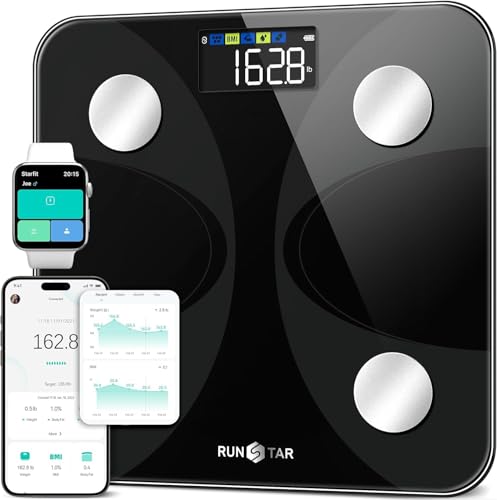
When people ask which smart scale is closest to DEXA [dual-energy X-ray absorptiometry], they are really asking which design decisions reduce bias and improve agreement. The short answer is that multi-frequency BIA [bioelectrical impedance analysis] with more contact points tends to outperform single-frequency, foot-only devices when protocols are consistent. Scales that include 8-point contact, segmental analysis for arms, legs, and trunk, and algorithms adjusted for athletic profiles can reduce typical error and track change more faithfully. In small independent studies, these designs have shown tighter group-level agreement with DEXA, especially for body fat percentage and skeletal muscle indices.
Yet hardware is only half the equation. The app experience, data smoothing, and the way trend graphs handle outliers also shape how useful your numbers feel day to day. Look for clear explanations of each metric, transparent developer notes on algorithm updates, and the option to export raw readings for your own analysis. If you are strength training, the ability to see segmental changes after a training block can validate what you feel in the gym. If you are on a weight-loss plan, consistent morning readings paired with gentle trend lines can keep motivation high without overreacting to water swings.
| Feature To Look For | Why It Matters for DEXA-Like Results | What “Good” Looks Like |
|---|---|---|
| Multi-frequency impedance | Different frequencies probe intra- and extracellular water for better tissue modeling | Published mention of multiple frequencies and impedance vector reporting |
| 8-point electrode contact | Hand and foot paths measure upper and lower body, reducing trunk bias | Handles or retractable grips plus metal footplates |
| Segmental analysis | Tracks arms, legs, and trunk separately to reflect training adaptations | Per-limb fat and muscle estimates with trend graphs |
| Protocol guidance | Reduces day-to-day variance from hydration and temperature | App reminders for time of day and pre-weigh guidelines |
| Algorithm transparency | Clarifies assumptions for athlete mode and demographic modeling | Release notes for updates and exportable raw data |
| Connectivity and backups | Protects your history and supports cross-platform insights | Bluetooth plus optional Wi-Fi [wireless networking] with offline caching |
| Privacy controls | Ensures sensitive health metrics remain under your control | Granular sharing settings and local-only options |
How to judge accuracy: agreement, not just correlation
It is easy to be impressed by a high correlation coefficient between a scale and DEXA [dual-energy X-ray absorptiometry], but correlation can be misleading. Two devices can move up and down together while still disagreeing by several percentage points on actual body fat. What you want is good agreement, often evaluated by metrics like mean absolute error, standard error of estimate, and Bland–Altman plots that show bias across the range of values. In consumer contexts, independent testing often reports body fat percentage error in the neighborhood of 3 to 5 percentage points at the individual level, with smaller errors for tracking direction of change rather than absolute values.
Moreover, internal validity features matter. Multi-frequency models can reduce water-related swings, and 8-point contact tends to contain trunk estimation error that plagues foot-only designs. Apps that flag inconsistent readings and offer a recommended “best-of-three” morning approach can tighten your personal error envelope. Over a month, that means your moving average can align more closely with the hard numbers you would get from a DEXA session, even if any single reading is imperfect. The result is a tool you actually trust, not a gadget you step on once and forget.
| Common Error Source | Typical Effect on Reading | Mitigation Strategy |
|---|---|---|
| Hydration shift | 1 to 2 percentage points swing in body fat estimate | Weigh at the same time daily, pre-breakfast, after restroom |
| Recent workout | Temporary changes in water distribution can skew impedance | Avoid strenuous exercise 12 hours before key readings |
| Skin temperature | Cold feet increase resistance and overestimate fat | Warm room, dry feet, same floor surface |
| Foot placement | Inconsistent contact lowers repeatability | Use visual guides or textured plates for identical stance |
| Algorithm misclassification | Athletic users misread if not using athlete mode | Enable athlete mode if you meet the criteria |
| Time-of-day variability | Diurnal changes can shift body water and weight | Pick a daily time window and stick to it |
Your at-home protocol for DEXA-like consistency


Even the best hardware cannot rescue a messy routine. The secret to getting DEXA-like stability from an at-home scale is to reduce variability the same way labs do: control the conditions and log enough data for clear trends. A simple, repeatable ritual can shrink your personal noise band, making weekly averages meaningful and month-over-month changes obvious. Imagine a diagram in your head: one axis for time, one for readings, and a smooth rolling average that filters day-to-day bumps into a steady line you can act on. That is the goal.
- Weigh at the same time each morning, before food or drink, after using the restroom.
- Keep feet clean and dry, and use the same hard, level surface every time.
- Avoid intense workouts and alcohol for 12 to 24 hours before key check-ins.
- Turn on athlete mode if you regularly perform high-volume training and meet the criteria.
- Use the largest stable data set: log at least three readings per week and review a 14 to 30 day rolling average.
- Enable segmental scans if available; track trends by limb to align with program blocks.
- Consider monthly “control days” where you replicate conditions exactly to validate progress.
- If you ever feel dizzy or unwell, skip the session and prioritize recovery.
Safety matters. BIA [bioelectrical impedance analysis] devices are not recommended for people with implanted electronic medical devices, and guidance varies for pregnancy. Always follow the manufacturer’s instructions and discuss concerns with a clinician if needed. The aim is to use technology to support your health journey, not to replace professional care.
Privacy, integrations, and long-term motivation
Choosing a scale that aligns with your data values is just as important as picking one that aligns with DEXA [dual-energy X-ray absorptiometry]. Many smart platforms now offer local-only modes, selective cloud syncing, and the ability to export comma-separated values for personal analysis. Integrations with Apple Health and Google Fit can centralize your metrics, while thoughtful app design turns raw numbers into context you can use. If you are a frequent traveler, look for reliable offline caching and quick Bluetooth reconnection so your routine stays intact on the road.
Motivation is a design feature. Progress rings for streaks, milestone badges for trend stability, and prompts that suggest actions rather than judgments can keep you engaged through plateaus. If you are optimizing for lifestyle upgrades, a well-made scale becomes part of a broader ecosystem that might include smart home devices, fitness wearables, and travel-friendly accessories like compact chargers or foldable mats. The best experience feels like a supportive coach: clear directions, consistent feedback, and zero nagging.
How High Tech Reviews explains DEXA closeness and simplifies your choice
At High Tech Reviews, our mission is to eliminate guesswork for adults and tech-savvy consumers who want trustworthy guidance on innovative gear. Our in-depth gadget reviews and comparisons focus on how features map to real outcomes, not on brand-versus-brand sparring. For smart scales, we outline the features to evaluate—multi-frequency capability, electrode design, segmental reporting, app transparency, protocol tools, privacy controls, and data portability—and we summarize what independent research and best-practice protocols say about stability and trend tracking.
We complement broader hands-on testing across many accessory categories with expert commentary on trending high-tech tools and comprehensive guides for smart home and fitness devices. When relevant, we reference industry findings that compare BIA [bioelectrical impedance analysis] to DEXA [dual-energy X-ray absorptiometry] so our guidance remains anchored to evidence. Then we translate all of that into clear, consumer-ready advice: what the feature means, how it helps you, and who benefits most. Our curated selection of travel and lifestyle accessories rounds out the experience, helping you sustain your healthy routine at home and on the go without carrying a lab in your backpack.
If you are scanning resources because you struggle to find reliable, detailed information, you are exactly who we write for. The website provides expert buying guides, product highlights, and curated recommendations that help users make informed purchasing decisions and discover the best technology solutions. In plain terms, we sift the specs, synthesize the evidence, and show you the shortest path to a smart scale that fits your life and helps you get closer to your DEXA goals.
Real-world examples: who benefits from DEXA-like smart scale setups

Consider a recreational lifter who is entering a strength block after a cut. With an 8-point, multi-frequency scale and a morning protocol, their segmental leg and trunk estimates rise gradually while body fat percent holds steady across four weeks. That profile matches the training plan’s expectation and gives confidence to maintain calories. Now picture a traveler committed to health on the road. With dependable offline logging and straightforward trend graphs, they can keep the habit alive, then sync data when back on Wi-Fi [wireless networking], preserving the integrity of their 30 day average.
Or think about a beginner focused on sustainable weight loss. Daily numbers bounce, but weekly averages slide predictably, and the app reframes short spikes as normal water shifts. Over three months, total body weight falls, estimated muscle mass remains stable, and clothes fit better. When that user schedules a DEXA [dual-energy X-ray absorptiometry] scan, the lines on the app and the lab report rhyme. That is the practical meaning of “closest to DEXA” for everyday life: consistent signals, fewer doubts, and decisions you can act on with calm confidence.
Buying checklist and next steps
Your best pick is the one that combines strong hardware, helpful software, and a routine you can stick with. Start by prioritizing features that minimize known error: multi-frequency measurement, 8-point contact, and segmental analysis if you value regional insight. Next, ensure the app supports a simple, repeatable protocol with reminders, flags for outliers, and export options. Finally, align the device with your privacy preferences and travel pattern so consistency never depends on perfect conditions. Do that, and the question of which smart scale is closest to DEXA [dual-energy X-ray absorptiometry] becomes less about brand names and more about fit for your body and lifestyle.
- Define your goal: fat loss, recomposition, or athletic performance.
- Pick features that match the goal: segmental for training, trend-first for weight loss.
- Lock a protocol: morning routine, three or more readings weekly, rolling averages.
- Review outputs monthly against expectations and adjust plans thoughtfully.
- Consider periodic DEXA scans to anchor your long arc of progress.
Bottom line: You will get closest to DEXA-like clarity by combining multi-frequency, 8-point hardware with a disciplined weighing routine and an app that treats trends as first-class citizens.
Conclusion
The closest path to DEXA-level confidence at home blends smarter sensor design with smarter habits. Choose features that tame variability, then let consistent routines turn data into direction.
In the next 12 months, expect more segmental insights, clearer algorithm notes, and privacy-first syncing that plays well with your wider smart home. Imagine stepping on, seeing steady trends, and feeling assured rather than anxious.
Which habits will you lock in this week so your smart scale becomes a trusted coach instead of a noisy critic?
Additional Resources
Explore these authoritative resources to dive deeper into smart scales with body composition analysis reviews.
High Tech Reviews Helps You Choose DEXA-Like Smart Scales
With in-depth gadget reviews and comparisons, we provide expert buying guides, highlights, and curated picks that help adults and tech-savvy consumers make informed purchases and discover the best technology solutions.



What services does Best High Tech Gadgets For Adults provide?
Best High Tech Gadgets For Adults provides practical technology solutions designed around customer needs. Our team focuses on clear communication, reliable support, and outcomes that help people make informed decisions quickly.
How can customers get help quickly?
Customers can contact our team directly for fast support, clear next steps, and timely follow-up. We prioritize responsiveness so questions are answered quickly and issues are resolved without unnecessary delays.
Why choose Best High Tech Gadgets For Adults over alternatives?
Customers choose us for trusted expertise, transparent guidance, and consistent results. We focus on practical recommendations, personalized service, and long-term relationships built on reliability and accountability.


