


About Best High Tech Gadgets For Adults: Best High Tech Gadgets For Adults is your trusted source for cutting-edge technology insights and solutions. High Tech Gadget Reviews We provide reliable, well-researched technology content to keep you informed and help you make better decisions. This content focuses on Camera Lenses Focal Length Explained: A Beginner’s Guide to Epic Photos and related topics.


- This is a 2.8mm focal length camera lens; It has F2.0 large aperture.
- High definition image, good color reduction and small distortion.
- This CCTV camera is suitable for all IP cameras with M12*0.5mm mount.

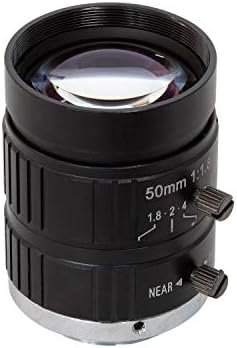
- It Just Works – We’ve tested this lens among the many other selected on the 12MP RPi HQ Camera. No lens shading, no dark…
- A Real Telephoto Lens – It offers longer focal length 50mm compared to the official named telephoto lens 16mm, which hel…
- Field of View (FOV) – 10°(H)×7°(V), 7°(H) on 1/2.3″ IMX477 High Quality Camera


- This is a 2.8mm focal length camera lens; It has F2.0 large aperture.
- High definition image, good color reduction and small distortion.
- This CCTV camera is suitable for all IP cameras with M12*0.5mm mount.
Camera Lenses Focal Length Explained: A Beginner’s Guide to Epic Photos
Getting your first real camera is an incredible feeling. But then you see the numbers on the lens—18-55mm, 50mm, 70-200mm—and it can feel a little overwhelming. What do they even mean. The secret to transforming your photos from simple snapshots to stunning, professional-looking images lies in understanding one core concept: the camera lenses focal length.
This single specification is the most powerful creative tool you have. It’s not just about zooming in; it’s about changing perspective, telling a story, and controlling exactly what your viewer sees and feels. It’s the magic that makes landscapes feel vast and portraits feel intimate.
Mastering the focal length of camera lenses is your ticket to taking full creative control. It dictates how much of the scene you capture (your angle of view) and how large or small your subject appears (magnification). Forget complicated jargon for a moment. Think of it as choosing the right paintbrush for your masterpiece.
A wide brush is perfect for a sweeping sky, while a tiny, fine-tipped brush is what you need for delicate details. Different focal lengths are your different paintbrushes, and learning to use them is where the real fun begins.
This guide will break down everything you need to know in simple, exciting terms. We’ll explore what those numbers mean, how different focal lengths create dramatically different images, and how you can choose the perfect one to capture the world exactly as you see it. Get ready to level up your photography game!
What You’ll Learn
- What Focal Length Actually Is: A simple, jargon-free explanation of the numbers on your lens and how they relate to angle of view and magnification.
- The Creative Power of Different Lenses: Discover how wide-angle, standard, and telephoto lenses create unique looks for landscapes, portraits, and action shots.
- How to Choose the Right Lens: A practical guide to picking the perfect focal length for your specific photography style, whether you’re a beginner or looking to expand your kit.
- Prime vs. Zoom Lenses: Understand the key differences, pros, and cons to decide which type is best for your needs and budget.
- Common Myths Busted: We’ll clear up common confusion around focal length, zoom, and other technical specs so you can shoot with confidence.
What Exactly is Camera Lenses Focal Length? (The Simple Explanation)


Let’s get the technical part out of the way, but I promise to make it painless! Understanding the core idea of camera lens focal lengths is the foundation for every creative decision you’ll make. It’s less about math and more about what you see in the viewfinder.
The Technical Definition (in Millimeters)
The focal length of camera lenses is measured in millimeters (mm). This number represents the distance from the optical center of the lens (the point where light rays converge inside) to your camera’s sensor when the lens is focused at infinity. A lens labeled “50mm” has a 50-millimeter distance, while a “200mm” lens has a 200-millimeter distance.
But honestly, you don’t need to remember the physics of it. What’s important is what this number does to your image. A smaller number (like 18mm) means a shorter focal length, and a larger number (like 200mm) means a longer focal length. That’s the key takeaway!
The Practical Effect: Angle of View & Magnification
This is where it gets exciting! Focal length directly controls two things: your angle of view and magnification.
Imagine you’re looking at a beautiful mountain range through a window. That’s your camera sensor. Now, imagine holding a short cardboard tube up to your eye. You can see a very wide part of the scene, right.
That’s a short focal length (e.g., 24mm). It gives you a wide angle of view, capturing more of the environment.
Now, imagine holding a very long cardboard tube. Your view becomes much narrower, and a distant mountain peak appears much larger, filling your entire view. That’s a long focal length (e.g., 200mm). It gives you a narrow angle of view and magnifies your subject.
Simple as that.
- Short Focal Length (e.g., 16mm, 24mm): Wide angle of view, low magnification. Captures a lot of the scene.
- Long Focal Length (e.g., 135mm, 300mm): Narrow angle of view, high magnification. Isolates distant subjects.
How Sensor Size Changes Everything (Crop vs. Full-Frame)
Here’s one crucial detail: the effect of a focal length depends on your camera’s sensor size. The two main types are “full-frame” and “crop sensor” (often called APS-C). A full-frame sensor is larger, while a crop sensor is smaller and essentially “crops” the image from the lens.
Because of this cropping effect, a 50mm lens on a crop sensor camera will give you a narrower field of view, making it look more like a 75mm or 80mm lens would on a full-frame camera. This is called the “crop factor.” You don’t need to get bogged down by the math, just remember that if you have a crop sensor camera, your lenses will appear more “zoomed in” than the number on the lens suggests.
The Creative Superpowers of Different Lens Focal Lengths
Okay, now for the fun part! Let’s talk about how different camera lens focal lengths can completely change the mood, story, and impact of your photos. This isn’t just about getting closer or further away; it’s about perspective and emotion.
Wide-Angle Lenses (Below 35mm): Capturing the Grand Scene
Wide-angle lenses are your go-to for making a scene feel vast, epic, and immersive. With focal lengths typically ranging from 14mm to 35mm, they pull in a huge amount of the environment. This makes them absolutely perfect for breathtaking landscapes, sweeping cityscapes, and architectural photography.
They have a unique characteristic: they tend to exaggerate perspective. Objects close to the lens will appear very large, while objects in the background will seem smaller and farther away. You can use this to your advantage! Place an interesting flower or rock in the foreground of a landscape shot to create a powerful sense of depth that pulls the viewer right into the scene.
Be aware that ultra-wide lenses (below 24mm) can cause some distortion, especially at the edges of the frame. Straight lines might appear to curve. While sometimes this is an unwanted effect, it can also be used creatively to add drama and a unique, dynamic feel to your images.
Standard Lenses (35mm to 70mm): The “Human Eye” Perspective
Often called “normal” lenses, this range (especially the classic 50mm) is beloved by photographers because it captures the world in a way that feels natural and true to how we see it with our own eyes. It doesn’t dramatically distort or compress the scene, offering a wonderfully honest perspective.
This makes standard lenses incredibly versatile. They are fantastic for street photography, allowing you to capture scenes as they unfold without the exaggeration of a wide-angle. They’re also brilliant for environmental portraits, where you want to show a person within their surroundings. A 35mm or 50mm prime lens is often recommended as a first lens purchase after the kit lens for this very reason—it forces you to move your feet and think about composition, making you a better photographer.
Pro Tip: A 50mm f/1.8 lens is often called the “nifty fifty” because it’s affordable, lightweight, and produces beautifully sharp images with a blurry background (bokeh). It’s one of the best investments a new photographer can make!
Telephoto Lenses (Above 70mm): Bringing the Action to You
When you need to get close to a subject you can’t physically approach, a telephoto lens is your best friend. With focal lengths from 70mm all the way up to 600mm and beyond, these lenses are the champions of wildlife, sports, and concert photography.
But their magic isn’t just about magnification. Telephoto lenses have a stunning effect called compression. They make the background appear much closer to the subject than it actually is. This is amazing for portraits.
Shooting a portrait at 85mm or 135mm will flatten the subject’s facial features in a flattering way and make the background elements appear large and beautifully blurred, completely isolating your subject and making them pop.
This compression effect can also be used in landscape photography to make distant mountains look massive and imposing behind a foreground subject. It’s a powerful tool for creating images with a sense of scale and drama that other lenses simply can’t replicate.
How to Choose the Perfect Focal Length for Your Photography

Choosing the right lens can feel like a huge decision, but it doesn’t have to be! The best lens focal length for you depends entirely on what you love to shoot. Let’s break it down into a simple, practical guide.
What Do You Love to Shoot? (Matching Focal Length to Genre)
Think about the subjects that excite you the most. Your passion will point you toward the right tool for the job.
- For Landscapes & Architecture: You want to go wide! Look for lenses in the 16-35mm range. This allows you to capture the full scale of a mountain range or the height of a skyscraper.
- For Street & Travel Photography: Versatility is key. A standard lens like a 35mm or 50mm is perfect for a natural field of view. A versatile zoom lens like a 24-70mm is also a fantastic all-in-one option.
- For Portraits: To get that flattering look and blurry background, you’ll want a short telephoto. An 85mm lens is the classic choice for portraits. A 50mm is also great for full-body or environmental shots, and a 135mm offers incredible compression and bokeh.
- For Sports & Wildlife: You need reach! A telephoto zoom lens is essential here. A 70-200mm is a great starting point, but for birds or distant action, you’ll want to look at lenses that go to 300mm, 400mm, or even 600mm.
Prime vs. Zoom Lenses: The Great Debate
You’ll hear photographers debate this constantly. Both have incredible strengths, and the right choice is personal.
Prime Lenses have a fixed focal length (e.g., 50mm). You can’t zoom in or out. – Pros: They are typically sharper, lighter, and have a wider maximum aperture (e.g., f/1.8), which is amazing for low-light situations and creating that creamy, blurred background. They also teach you to be a better photographer by forcing you to “zoom with your feet.”
- Cons: You’re stuck with one perspective.
If you need to change your framing, you have to physically move, which isn’t always possible.
Zoom Lenses have a variable focal length (e.g., 24-70mm). You can twist the lens to change your angle of view. – Pros: They are incredibly versatile. You can go from a wide landscape shot to a tighter portrait shot without moving or changing lenses.
This is perfect for travel, events, or any situation where things are happening fast. – Cons: They are generally heavier, more expensive, and often have a smaller maximum aperture (e.g., f/2.8 or f/4) compared to a prime lens at a similar price point.
What’s the Best Focal Length for a Beginner?
This is one of the most common questions, and the answer is simple: start with what you have! Your 18-55mm kit lens is a fantastic learning tool. It gives you a range from wide-angle (18mm) to a short telephoto (55mm), allowing you to experiment with different perspectives and discover what you enjoy shooting most.
Once you’re ready to buy your first new lens, the absolute best investment is a 50mm f/1.8 prime lens. It’s affordable, will produce images that are dramatically sharper than your kit lens, and its wide aperture will unlock a whole new world of low-light photography and beautiful background blur. It will feel like a massive upgrade!
Here’s a fantastic video that explains focal length in a really clear, visual way:

Understanding the Numbers: A Practical Guide
As you dive deeper into the world of photography, you’ll hear certain terms and lens focal lengths mentioned over and over. Understanding these common benchmarks will help you navigate gear reviews and make smarter decisions for your own kit.
Decoding the “Holy Trinity” of Lenses
In the world of professional photography, especially for event and wedding shooters, you’ll often hear about the “Holy Trinity.” This refers to a set of three professional zoom lenses that cover a massive range of focal lengths, all with a fast, constant aperture of f/2.8.
- The Wide-Angle Zoom (e.g., 16-35mm f/2.8): This is for epic establishing shots, large group photos, and capturing the entire scene in tight spaces.
- The Standard Zoom (e.g., 24-70mm f/2.8): This is the workhorse. It’s the most versatile lens, covering everything from wide-ish environmental shots to classic portraits.
- The Telephoto Zoom (e.g., 70-200mm f/2.8): This is for capturing moments from a distance, getting tight shots during ceremonies, and creating beautiful, compressed portraits.
While incredibly powerful, these lenses are also very expensive and heavy. You absolutely do not need them all to take amazing photos, but it’s helpful to understand why they are so highly regarded for their versatility and performance.
How Far Can a 400mm Lens Really Reach?
It’s tempting to think a 400mm or 600mm lens is like a telescope, but its effective reach depends on the size of your subject. A 400mm lens is fantastic for filling the frame with a large animal like a deer from a safe distance, or capturing a tight shot of a soccer player from the sidelines.
However, for a very small bird high up in a tree, even a 400mm lens might not feel like enough, and you may still need to crop your photo in editing. The key is that a longer focal length gives you more pixels on your subject, which allows for a much cleaner, more detailed image (and more cropping potential) than you could ever get with a wider lens.
A Note on Pricing: Why Do Some Lenses Cost So Much?
When you start shopping, you’ll see a 50mm lens for $125 and another 50mm lens for $2,000. What gives? The price of a lens is determined by several factors beyond just its focal length.
- Maximum Aperture (f-stop): Lenses with a wider maximum aperture (a smaller f-number like f/1.2 or f/1.4) let in much more light and are more complex and expensive to build.
- Glass Quality: High-end lenses use special glass elements (aspherical, extra-low dispersion) to correct for optical imperfections, resulting in sharper images with better color.
- Build Quality & Weather Sealing: Professional lenses are built with durable metal bodies and have rubber gaskets to protect them from dust and moisture.
- Image Stabilization: Some lenses have built-in stabilization to help you get sharp photos when shooting handheld at slower shutter speeds, adding to the cost.
Common Misconceptions About Lens Focal Length


There’s a lot of information out there, and some of it can be confusing. Let’s clear up a few common myths about camera lenses focal length so you can focus on what really matters: creating amazing images.
Myth #1: “Longer Focal Length Means Better ‘Zoom'”
This is a big one, especially for those coming from phone cameras. The term “zoom” can be misleading. In photography, we differentiate between optical zoom and digital zoom.
Optical zoom is what happens when you physically change the focal length of a zoom lens (e.g., going from 70mm to 200mm). You are using the lens optics to magnify the image without losing any quality. Digital zoom, which is common on phones and point-and-shoot cameras, is simply cropping into the image and enlarging the pixels. This always results in a significant loss of image quality.
A prime lens has no optical zoom at all. A telephoto prime lens (like a 400mm) has high magnification, but it can’t “zoom.”
Myth #2: “You Need Every Focal Length”
It’s easy to get Gear Acquisition Syndrome (GAS) and believe you need a lens for every possible situation. The truth is, some of the world’s best photographers built their careers using just one or two focal lengths, like a 35mm and a 50mm.
Working with limitations forces you to become more creative. Using a single prime lens for a day will teach you more about composition, light, and perspective than having a bag full of zooms. Master the gear you have before you decide you need something new. You’ll be surprised at what you can achieve!
Pro Tip: Challenge yourself! Go out for a day with only one prime lens. You’ll have to move your body to frame your shots, and you’ll start seeing the world in a whole new way. It’s one of the best exercises for developing your photographic eye.
Myth #3: “Focal Length is the Same as Aperture”
This is a common point of confusion for beginners. They are two completely separate, though equally important, lens characteristics.
- Focal Length (mm): Controls your angle of view and magnification. It’s about what you see in your frame.
- Aperture (f-stop): Controls the amount of light entering the lens and the depth of field (how much of your scene is in focus). It’s about how your image looks in terms of brightness and background blur.
You can have two 50mm lenses—one with a maximum aperture of f/1.8 and another with f/1.2. They have the exact same focal length and angle of view, but the f/1.2 lens can let in much more light and create a much blurrier background.
Frequently Asked Questions (FAQ)
Let’s tackle some of the most common questions photographers have about lens focal lengths.
What is the focal length in camera lenses?
In simple terms, the focal length is a number measured in millimeters (mm) that tells you two things about a lens: its angle of view (how much of the scene it captures) and its magnification (how large subjects will appear). A small number like 24mm gives you a wide view, perfect for landscapes. A large number like 200mm gives you a narrow, magnified view, perfect for bringing distant subjects like wildlife much closer.
Is a 35mm or 50mm lens better?
Neither is objectively “better”—they’re just different tools for different creative visions. A 50mm lens provides a very natural perspective that’s close to the human eye, making it a fantastic all-around lens for portraits and general photography. A 35mm lens is slightly wider, which allows you to capture more of the environment. This makes it a favorite for street photography, travel, and environmental portraits where the setting is just as important as the subject.
Many photographers own and love both! If you have to choose one, a 50mm is often recommended as a first prime lens because of its versatility and flattering perspective for people. If you find yourself constantly wanting to step back to fit more in the frame, a 35mm might be a better fit for your style.
What is the best focal length for a beginner?
The best starting point is the 18-55mm kit lens that likely came with your camera. It provides a great range to experiment with, from wide-angle to a light telephoto. Once you’re ready to upgrade, the single best focal length for a beginner to buy is a 50mm prime lens (specifically an f/1.8 version). It’s affordable, incredibly sharp, and will teach you a huge amount about composition and working with light.
Is 35mm too wide for portraits?
Not at all, but it requires a different approach than a traditional portrait lens like an 85mm. A 35mm is considered an environmental portrait lens. It’s perfect for showing a subject within their context—a chef in their kitchen, an artist in their studio, or a child in their favorite park. However, if you get too close to a person’s face with a 35mm lens for a tight headshot, it can cause some unflattering distortion.
For close-up portraits, a 50mm or 85mm is a better choice.
Should I get a 50mm or 85mm for portraits?
This is a classic portrait dilemma! A 50mm lens is incredibly versatile. It’s great for half-body and full-body portraits and gives a very natural, relatable feel to the images. You do need to be relatively close to your subject for a tighter shot.
An 85mm lens is a dedicated portrait lens. It allows you to stand further back from your subject, which can make them feel more comfortable. It also provides more significant background compression and blur (bokeh), which really helps your subject stand out. If your primary focus is beautiful, classic portraits with creamy backgrounds, the 85mm is the undisputed champion.
Is F 2.8 or F 4 better?
This question is about aperture, not focal length, but it’s a critical factor when choosing a lens. A lower f-number like f/2.8 means the lens has a wider maximum aperture. This allows it to let in twice as much light as an f/4 lens. This makes an f/2.8 lens much better for shooting in low-light conditions (like indoors or at dusk) without needing to raise your ISO too high.
It also allows you to create a shallower depth of field, meaning a more blurred background.
The trade-off is that f/2.8 lenses are significantly larger, heavier, and more expensive than their f/4 counterparts. An f/4 lens is a fantastic, more affordable, and lighter option, especially for photographers who primarily shoot outdoors in good light, like landscape or travel photographers.
Final Thoughts: Your Creative Journey with Focal Length
Understanding camera lenses focal length is like learning a new language—the language of visual storytelling. It’s the tool that allows you to shout with a wide-angle landscape or whisper with an intimate telephoto portrait. It’s not about having the most expensive gear or a bag full of every lens imaginable. It’s about understanding the tools you have and using them with intention.
Your journey starts with experimentation. Use your kit lens and pay attention to which focal lengths you gravitate towards. Do you love the expansive feel of 18mm or the tight, focused view of 55mm. Let your curiosity guide you.
Rent a prime lens for a weekend and see how it changes the way you shoot. The numbers on the lens are just a starting point; the real magic happens when you look through the viewfinder and decide how you want to frame your world.
So get out there and shoot. Play with perspective. See how getting closer with a wide lens differs from standing back with a long lens. The more you practice, the more intuitive it will become.
Soon, you won’t just be taking pictures—you’ll be crafting images that perfectly express your unique vision. Happy shooting.
What services does Best High Tech Gadgets For Adults provide?
Best High Tech Gadgets For Adults provides practical technology solutions designed around customer needs. Our team focuses on clear communication, reliable support, and outcomes that help people make informed decisions quickly.
How can customers get help quickly?
Customers can contact our team directly for fast support, clear next steps, and timely follow-up. We prioritize responsiveness so questions are answered quickly and issues are resolved without unnecessary delays.
Why choose Best High Tech Gadgets For Adults over alternatives?
Customers choose us for trusted expertise, transparent guidance, and consistent results. We focus on practical recommendations, personalized service, and long-term relationships built on reliability and accountability.


